
*This post may contain affiliate links. As an Amazon Associate we earn from qualifying purchases.
If you are a record collector or simply someone who loves the look, feel, and sound of vinyl then you know how expensive records can get. This is true if you are collecting rare records or simply trying to get your hands on all the records from your favorite artist.
Records can quite simply be EXPENSIVE!
So assuming you don’t want to spend a fortune, how can you get vinyl records cheap?
There are a few different places you should look and a few tips you should learn so you can find records for a good price. You should start by looking for records at:
- Yard Sales
- Pawn Shops
- Flea Markets
- Estate Sales/ Auctions
- Thrift Stores
Of course where you buy from isn’t as important and making sure to keep these tips in mind:
- Buy genre and not artists
- Avoid online stores
- Dig deep
- Check conditions
- Don’t buy rare releases
- Only buy what you can afford
- Buy in bulk
Each of the above places and tips are important to your record buying success. If you expect to go onto eBay or Amazon and find a deal on records you are sadly mistaken. Sure, every now and again you might find a good deal on a bulk lot of records on eBay but those are few and far between.
That’s because shipping giant boxes of records will absolutely destroy any profits that the seller would make by selling them to you.
In the rest of this article I will go into more depth about each of those places and then I will wrap it up with the tips at the end of the article.
Do you love playing your vinyl records but your record player has seen better days? Well, you are in luck! There are tons of great record players that not only have great sound quality but also won’t break the bank. You can find them by clicking here.
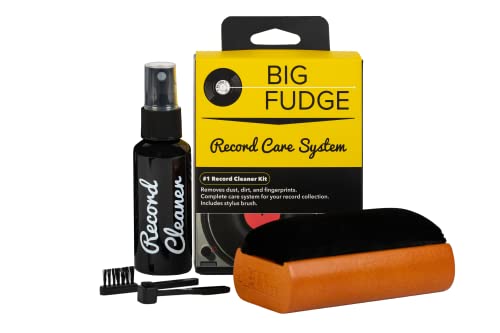
If you love records and record players, you must get a record-cleaning kit like this one. It is designed to ensure that your records stay in excellent condition to last you for decades.
Get this cleaning set and keep your vinyl records in perfect condition!
Places to get vinyl records cheaply
It is possible to get a vinyl record at a good price even though the market is on the rise and prices of vinyl records are high. You can enjoy all the benefits of a vinyl album and record player without spending a lot of money but you have to look in the right places. If you want to keep your bank account intact you should check out each of these places below.
Yard Sales
Yard sales are more prevalent in some parts of the country than others but virtually every city has some yard sales every weekend during the spring, summer, and fall (and winter if you live in a warmer climate).
Finding records at a yard sale is hard work as it involves not only driving around and planning out your trip but also knowing where the sales might be at.
If you are looking specifically for records then you will want to hit up the older neighborhoods first. You can of course find records anywhere but starting where there is a higher concentration of people that were around when records were the most popular in the 40s-60s is a good bet.
You can also look through the “online yard sales”. By this I mean Facebook marketplace, groups, or Craigslist in your local area.
You can often find bulk deals on these types of groups for people that didn’t have a yard sale or had some left over. This is a great way to pick up a bunch of records for good prices.
Pawn Shops
Yes, I know that pawn shops are normally dirty and dingy stores that are in a run down building in the worst part of town (not always, don’t hate me pawn store owners) but you can sometimes find good deals there.
Normally the more run down a pawn shop is, the better prices you will get. You can normally find a wide variety of records here but don’t expect to find anything rare as most pawn shop managers/owners will try to sell anything valuable on eBay first and leave the leftovers in their storefront.
I have had some luck in the past but it is really hit or miss as you have to show up at the right time to get a decent amount and a good deal.
Flea Markets
Flea markets are personally my favorite place to find things. I love looking for treasures and the feeling I get when I find something amazing!
How good flea markets will do for you will vary widely depending on how large of an area that you are in as well as the sellers the market normally attracts. If the flea market charges a lot of money for a booth you will probably find prices are quite high and you might not find any deals at all.
If however the flea market has it where being a vendor is quite cheap then you are much more likely to find people there with cheap items that you might be interested in.
Half of the fun with flea markets is going in with no idea what you might actually leave with!
A couple of years ago I was visiting Colorado and went to a flea market that we came across. We spent a couple hours going through the different booths and seeing everything that each person had. I was digging through a bin at one of the booths and found a manilla envelope. Inside the envelope was blueprints for a 1940s roll top desk. These things were giant! I’m talking 3 foot tall by 5 foot wide! I took them up to the guy and he didn’t even know they were there!
I paid $10 for blueprints! It wasn’t until I got home that I realized I didn’t have one 3×5 blueprint but I had two! One showed how to make the top while the other shows how to make the base. Both of these giant blueprints now hang in my dining room and are a great showpiece.
You never know what you will find when you hit a flea market so if you are trying to add to your collection or just love the thrill of the hunt then flea markets will be tons of fun for you!
Estate sales/ auctions
Estate sales are a great way to find records that have been sitting around for decades! Often an estate sale will be held when someone is downsizing and is trying to sell all of their possessions before they sell their house. Sometimes these sales will be held in a house and prices will be marked with them getting cheaper every day throughout the sale. Other times they will be held as auctions and an auction house will sell a bunch of different people’s possessions at once.
Whether you can get a good deal at these types of sales depends entirely on the person or company who is doing the sale. I’ve seen estate sales that don’t sell anything at all because they have the prices way too high. I’ve even seen some estate sales where they have a print out from eBay of how much that item is listed for on eBay and they have it the same price!
Those are obviously not going to be very good places to find a deal.
Sometimes however you come across a sale or auction that is run by someone who is not only reasonable but is willing to sell things in bulk for even better prices. Those sorts of sales make up for all the bad ones that you will run into.
On a related subject you can also go to storage locker auctions (yes, like Storage Wars). Although you probably won’t find the $50,000 worth of items that they sometimes find on the show you also won’t be paying thousands like they do either. You can often pick up lockers for $30-$50 that have a decent amount of stuff in them.
If you are only wanting to get records then you can keep a sharp eye out and only bid on a locker if you see some records inside. You could also go to the people who bought each locker and tell them you are looking to buy records in bulk and they might be interested in selling any that they find to you for a good price.
Thrift/Second Hand stores
Thrift and second hand stores are great places to pick up specific records that you are wanting to add to your collection. Most of the time you will be able to look through exactly what the records are that they have and only buy the ones that you want.
This can be especially useful if you are only looking to buy records from a specific artist or group.
The huge downside to these stores is that inventory changes on an hourly basis. Most stores will bring out new items throughout the day and whether you are able to find a record might be more luck than anything.
Before you keep going back to a store it is a good idea to double check and make sure that they even sell records. Some thrift stores stopped accepting them because they were getting overrun with them and no one wanted them. Of course that has changed as they are starting to come back into style but some stores still don’t allow them to be donated or sold.
If you want to only look for records online and don’t want to do the legwork of yard sales or hitting up some auctions or stores then you will want to check out the video below. In this video Too Many Records gives his tips on how to find cheap records online.
Tips and Tricks
Now to the part that I’m sure you’ve been waiting for… the tips and tricks section. In this section I will go into detail about the tips and tricks that I use to find great items at great prices.
All of these tips apply to buying in person so if you are interested in learning about tips for buying your records online then check out the video above.
Otherwise, let’s get started.
Buy Genre And Not Artists
Now this tip might seem blasphemous to some of you. You only want to listen to records from your favorite band because they are the best and everyone else is horrible! Or maybe you just prefer to only listen to a specific band because that was the band that played at your first concert or something like that.
Those, and many others, are all valid reasons but we are talking about getting records cheap here. If you want to get records cheaply you need to buy a genre not just one artist. When you make it where you are only looking for records from one particular person or band then you are severely limiting the number of good deals that you will be able to find.
Instead take the time to find out what other bands or artists played or sang in that same era and pick up records from all of them! You might be surprised and like a lot of unknown songs or bands that you have never heard of before!
Avoid Online Stores
I’m not saying you should avoid looking for records online at all. There are tons of good deals to be found on Craigslist, Facebook, Offerup, etc. I’m saying you should avoid actual stores.
One reason I avoid online stores is that records are expensive to ship. You will be paying for that shipping one way or another. Even if the store offers “free shipping” they are still going to be building those shipping costs into the purchase price that you are paying.
You don’t really think that store is losing money to ship that record to you, do you?
The second reason I avoid online stores is the markup. Every business has to make money otherwise they would be out of business (novel huh). For that online store to sell you a record for a specific price they are going to have to have that profit built in to the cost you are paying for the record.
I’m not saying stores shouldn’t make money but again, we are talking about how to buy records as cheaply as possible. If you are giving the store 40-50% margins on a used record that means you are paying 40-50% more than what you could buy it from an individual for. That isn’t cheap!
Now if you are trying to finish out a collection and only need one final record to finish it then buying online might be a great option. Just remember, you aren’t getting it “cheap”.
Dig Deep
So this one seems kind of vague so let me explain what I mean. If you are browsing a flea market, thrift store, antique mall, or a similar place don’t just glance at each booth as you walk by. Get in there and see what they have!
Open trunks, check under piles of things, look behind the products in front and see what is behind them, etc. Digging through each booth is a great way to score some cool records that you might not have found otherwise.
About a year ago my wife and I were at an “antique mall” now this wasn’t one of those high end shops. This was a place that has hundreds of different venders each with their own special section of the store.
We had spent over an hour inside this store and hadn’t found anything good but when we start we finish so we went to the very back of the store. We saw a hallway that had the bathrooms along it and a few random items on the wall that were for sale. We went down the hall and at the end was a small 10×10 room that just had a bunch of odds and ends small items in it.
We started digging…
We had looked through most of the stuff and I was digging through a pile of old magazines when I found them… two newspapers. The first paper was from July 21, 1969. The second was from May 7, 1945. The prices for these odds and ends papers? $5
The pictures of both papers can be found below. They currently hang in the hall of my house and are my favorite things that I have found to date.


I never would have found those two papers if I hadn’t dug deep.
Check Conditions
Just a quick note here about this tip. ALWAYS check the condition of your records before you buy them. This goes if you are buying individually, in bulk, from a store, or from an auction. Always check.
Don’t assume that because the outside of the sleeve is fine that the record is too. It’s always important to double check. The last thing you want to do is get home all excited for your purchase and realize that the records you bought are all moldy or half of them missing!
ALWAYS DOUBLE CHECK
Don’t Buy Rare Releases
Buying rare records is fine if you are a collector and have tons of money to spend but in this article we are talking about buying cheap vinyls! One way to keep your record collection cheap is to not worry about how rare a release is.
There are tons of collectors that are willing to pay through the nose for one of a kind or limited quantity items. If you want to keep your investment down then don’t worry about those things.
Just worry about getting the music that you want to enjoy.
Only Buy What You Can Afford
We’ve all probably been there. The holy grail is there… staring you in the face. You finally found the one record you’ve always wanted to own… and it is 3X your budget for records.
You might be tempted to break the bank and just buy it because there will “never be another one” but unless it is a one of a kind record (which i mentioned above you should avoid) then there will always be more of them out there.
Don’t take collecting so seriously that you would hurt your family by spending too much to get one that you’ve always wanted.
I’ve always wanted to purchase a classic truck from the 50s but as of right now… I don’t own one. Why? Because It isn’t in the budget!
I would much rather wait to buy something until I can enjoy it with my wife by my side then to feel guilty about having it because I went behind her back and bought it.
Only buy what you can afford!
Buy In Bulk
Do you see what I did there? I told you not to spend too much money right before I told you to spend a lot of money!
When I say to buy in bulk I’m not talking about blowing up your bank account. I’m talking about when you are at the yard sale, thrift store, Craigslist, etc. to ask them how much they would take for all of them.
This is a great way to not only catch them off guard but to score an excellent deal. Honestly most people aren’t good with math, so if they have their records marked $2 each and there are 50 of them in the box if you ask them how much they will take for all of them you might score them all for $20-$30!
They are happy that they got rid of them all and you are happy because you got a great deal!
Buying in bulk works for a bunch of different things besides records too. I recently found some DVDs and Blu-rays on Facebook Marketplace. The person was selling the DVDs for $1 each and the blu rays for $3 each. I asked them how many of each they had and they told me 200 DVDs and 70 Blu Rays.
So at their original asking price they had $410 worth of DVDs and Blurays. When I asked them how much they would go for everything they told me they would do it all for $175! That is the kind of deal that buying in bulk can get you!
If at all possible buy your records in bulk and then sell off the titles individually that you don’t like or you have duplicates of.
Conclusion
When you think of having a collection of something most people just see giant dollar signs. How expensive it must be, but that doesn’t have to be true in your case.
If you are careful with the places you buy your records from and make sure to follow the tips that I gave you above, you should be well on your way to starting or finishing your collection without spending a fortune!
Good Luck!