
*This post may contain affiliate links. As an Amazon Associate we earn from qualifying purchases.
As the popularity of records has increased in recent years so has the need to be able to ship the record players. Shipping a record player is no easy feat and one that requires careful planning as well as careful packing.
Of course before you ship a record player you probably want to know how much it will cost to ship it. That is what this article is all about.
The cost to ship a record player will vary based on its size, weight, shipping service and where you are shipping it to and from. If you are shipping from Phoenix, Arizona to Boston, Massachusetts it will cost you $25 to ship a light record player up to $65 to ship a large heavy one.
The above numbers are based on the current rates for Priority Mail which seem to change on a yearly basis. With larger and heavier items UPS can often be cheaper than USPS but will normally take a little longer to arrive.
The shipping cost for a shorter distance will be considerably cheaper and if your record player can fit into a medium or large Flat Rate Box then you can get it shipped anywhere in the country for $15-$20.
Of course most record players will be larger than that so you would not be able to use that service for all record players.
Do you love playing your vinyl records but your record player has seen better days? Well, you are in luck! There are tons of great record players that not only have great sound quality but also won’t break the bank. You can find them by clicking here.
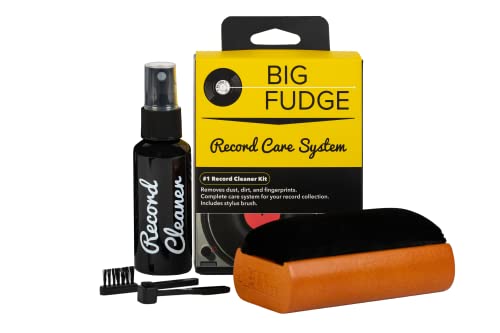
If you love records and record players, you must get a record-cleaning kit like this one. It is designed to ensure that your records stay in excellent condition to last you for decades.
Get this cleaning set and keep your vinyl records in perfect condition!
What affects the price of shipping?
Shipping a record player is no different than shipping any other items. The larger and heavier your item is, the more it will cost to ship it. This is true no matter which shipping company you are using anywhere in the world.
When you are shipping a record player, the first thing you will want to find out is how heavy it is. The easiest way to do this is to simply get a bathroom scale. Weigh yourself and then holding the record player weigh yourself again. The difference between the two numbers is how much the record player weighs.
Once you know its weight you can then start trying to find the best carrier for that weight. In the USA the Post Office is almost always the cheapest for any weight up until 15-20lbs. Anything over that and UPS and Fedex start to become more competitive in price.
Another thing that affects the shipping cost is the money you will spend on the box and wrapping of the player. Many people don’t take those things into account but they can add up very quickly. You can easily spend $4-$5 on a box and bubble wrap.
If you are selling a record player trying to make some money, that extra cost can quickly begin to add up. We will discuss packing your player in the next section.
The last thing I will mention is the cost of shipping insurance and signature confirmation. If your record player is extremely valuable then paying for both of these items is not only important but it is vital! You don’t want to have a $500 record player get lost during shipment and for you to be out that money!
Shipping insurance and signature confirmation costs will vary depending on which shipping company you use. If you use the post office signature confirmation will normally cost around $3 and insurance will cost $3-$5 as well depending on the value of the contents.
Make sure to price everything into the total cost of shipping before you ever head to the store.
Bonus Tip:
Paying and printing your shipping label at home will save you a ton of money over the retail prices at the Post Office. It is currently 15% more expensive to ship something at the counter of the post office than it is to print the same exact label from home.
How to pack a record player for shipping
No matter which shipping company you use how you package the player will be the determining factor for the condition it is in when arrives. Each shipping company will have some issues with items being damaged. In my experience there isn’t one company that is better than the other in this regard.
Each shipping company is going to have some lazy employees who simply don’t care or are having a bad day. All it takes is for that employee to handle your package and it can quickly become damaged.
I would recommend that you bubble wrap each individual part of the player that you can. Bubble wrap the tonearm, the platter, etc. and then bubble wrap the actual machine as much as you can. Once your player is bubble wrapped and inside the box you will then want to fill any loose area in the box with paper, packing peanuts, etc. The player moving around in the box is one of the worst things for it so make sure that once the box is closed, the player doesn’t move.
The last thing you want is for you to send your player that is in excellent condition and when it arrives it has been scratched or scuffed inside the box because it moved.
For more information about how to properly pack your turntable/record player for shipping check out this video below.
Tips for shipping records
If you are shipping a record player then it is pretty likely that you will be shipping some records at one point as well. For shipping records it is important to do a few simple things.
- Remove the disc and inner sleeve from the outer sleeve to prevent movement and scratches caused by movement during transportation. Place the disc in the inner sleeve over the outer package and secure it with bubble wrap and adhesive tape to prevent it from moving during transport.
- Next, place two large pieces of cardboard larger than your disc on either side of the disc so that it is firmly wrapped in the bubble wrap. Secure them all together with high-quality tape. This will help ensure that the outside sleeve as well as the record don’t get damaged during shipment.
- Put the nicely wrapped vinyl in the shipping carton of your LP, choose the carrier of your choice, print the shipping label, attach it to the box, and you’re ready to ship!
Can I send vinyl records in bulk?
One of the most popular items sent by people is a large collection of vinyl records that are sold in “batches” or can be sent by someone who is moving to another location. Of course, a large number of vinyl records can be quite heavy and expensive if they are sent by the post office, so be sure and do your research with all the possible shipping companies before deciding which one you will use.
For most giant, bulk shipments you will want to either use UPS or use media mail from the post office. Media mail can be super inexpensive but will often take a bit longer to arrive than a normal package or mail would. Since media mail is cheap the post office puts it at the bottom of the priority list so it moves the slowest.
Media mail can take 8-12 days to arrive (or even longer) but the cost savings for a large record collection is quite significant.
How long does it take to send records or record players overseas?
Many small businesses and individuals sending records and record players abroad must know how much it costs and how long it takes for them to arrive. Unfortunately the cost and time to arrive will vary significantly based on where you are sending it to and the shipping service you choose.
I’ve ordered things from overseas before that have taken a month or more to arrive! I’ve also ordered things from overseas that arrive in 4-5 days. You will also experience vast differences in your shipping times based on how much you pay for the shipping service.
Trying to balance the cost and time of arrival is the hardest thing when shipping outside of the country.
Also, remember that there are many express shipping options available from any service provider that will guarantee the fast delivery of everything that you send. Items can be delivered to most major cities or countries in just a few short days. Of course this service is far from being cheap.
What can you ship?
All shipping companies will have different rules on what you can and can’t ship. Most of them are pretty consistent that you can’t ship liquids using air mail. This is simply because it might freeze and explode and then when it thaws get all over a bunch of different packages.
Some things that you can’t ship with a normal shipping service are:
- Fireworks
- Flammable liquids
- Ammunition
- Etc.
Be sure and look up everything that you are shipping in the package before you send it out. You certainly don’t want your items to hurt someone or for you to get in trouble because you didn’t follow the rules properly.
Most shipping services have their rules and guidelines posted online so if you are shipping some cleaning solution or something like that with your record player, make sure that it is allowed with the company that you are shipping with.
Conclusion
Shipping something as heavy and fragile can be a nerve racking experience. However, if you take some simple precautions and make sure that item is well packaged you can rest easy knowing that it will arrive in good condition.
If your record player is very valuable then shipping it with signature confirmation and insurance is a great way to help you have peace of mind about the shipping process.