
*This post may contain affiliate links. As an Amazon Associate we earn from qualifying purchases.
Have you ever wondered how much a record player weighs? There are many different record players; from big machines all the way down to small portable ones. Depending upon what needs you have will depend upon which record player is best for you. Do you travel alot and prefer vinyl, or do you stay at home and never travel with your precious cargo. No matter what you do or where you go here are some turntables that will best suit you.
The weight of different record players will range from five pounds for portable ones, all the way up to 20 pounds for full size models. The average weight though is around seven to eight pounds.
A record player is a machine that is used to play a record to listen to the music or other sounds on it. You need to do more than just pressing a button to enjoy these record players. That is why it is very important to know about the working, weight, and other specifications of the record players to use them effectively.
Do you love playing your vinyl records but your record player has seen better days? Well, you are in luck! There are tons of great record players that not only have great sound quality but also won’t break the bank. You can find them by clicking here.
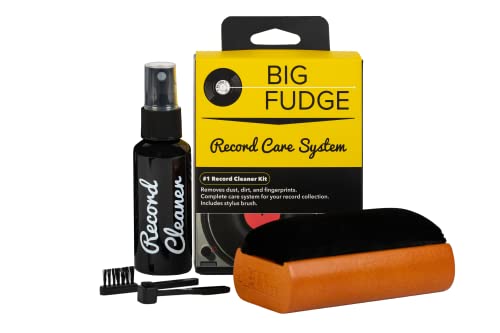
If you love records and record players, you must get a record-cleaning kit like this one. It is designed to ensure that your records stay in excellent condition to last you for decades.
Get this cleaning set and keep your vinyl records in perfect condition!
What are the weights and other specifications of the record players/turntables?
The best budget-friendly turntables and record players along with weight and other specifications are given below:
#1. 1byone Belt-Drive Stereo Turntable
This record player sells at a low price having solid wood and a classic look. It also has many useful features. All these features make it one of the most popular players available. Along with the stunning design, its functionalities are also thoroughly modern.
Weight and other Features
- The size dimensions of this record player are 14.8 by 11.4 by 5 inches, which is smaller than most competitors.
- It is one of the lightest options available on the market. The weight of the 1byone Belt-Drive Stereo Turntable is only 5 pounds.
- Beautiful wooden addition to any home
- This record player can play all records at all standard speeds i.e. 33 1/3, 45, and 78 RPM.
- Enjoy your modern collection as it can play MP3s via USB drive.
- Great sound from a small unit due to built-in full-range stereo speakers.
#2. 1byone Belt-Drive Portable Stereo Turntable
The 1byone portable turntable is another great option for record player lovers. It is the best suitcase player available within the $100 range. The 1byone is lightweight and small like the Cruiser, but it is made in a much better way. The internal speakers and material used in this turntable are good. The turntable also plays at all 3 standard record speeds.
Weight and other Features
- The turntable is ultra-portable, having dimensions as 5.1 by 10 by 13.8 inches.
- This turntable/record player weighs 5.7 pounds. So, it is extremely lightweight.
- Sturdy and beautiful design with leather exterior and wood suitcase-style
- Better sound quality and less distortion
- Tables and mobile connectivity options are available with 3.5mm aux-in slots.
- You can play any records at all speeds such as 331/3, 45, and 78 RPM.
- No additional equipment is needed due to built-in stereo speakerss
#3. Audio Technica AT-LP60 Belt Drive Turntable
The Audio Technica AT-LP60 has won many industry awards. It is a fully-automatic belt-drive turntable. If you are looking for a record player within a $100 range, it is the highest quality player you will find. It does not have built-in speakers as well as a USB port. However, you can also get its USB version by investing a few more dollars. It plays two speeds i.e. 33 1/3 and 45 RPM. The quality components used in this turntable result in great sound quality.
Weight and other Features
- The physical dimensions of this turntable are 15.9 by 5.9 by 17.8 inches. However, it is still fairly small.
- It weighs 8.5 pounds, which is a bit heavier than similar other record players, but extremely sturdy
- Plays record at consistent speed due to fully automatic belt-drive
- You can play records at 2 speeds i.e. 33-1/3 or 45 rpm
- Record platter made of high-quality material that works better and lasts longer
- The dust cover present in this record player protects the unit against dust and dirt.
#4. Crosley Cruiser II CR8005C
Crosley Cruiser II is very lightweight, small, and can run on battery power. This feature makes it the most portable record player. This record player uses aux input to play 3 speeds of vinyl and digital music. Another great thing is that it looks great and comes in 10 different colors. It has normal quality built-in speakers. If you want to hook up with outside speakers, you can do it via the RCA jacks. It is your only option when you are on trips or during camping due to its portability.
Weight and other Features
- The dimensions of this record player are 14 by 10.5 by 4.75 inches. So, it has an ultra-portable design.
- The weight of this record player is 5.5 pounds, which is quite light if we compare it with other record players available in the market.
- Wooden suitcase design is portable and gorgeous
- This turntable can play records anywhere on AC or 6 AA batteries.
- Tablet or mobile connectivity option via 3.5mm aux-in slot
- Can play any record at any speed such as 33 1/3, 45, and 78 RPM
- Good sound quality for dynamic full-range stereo speakers.
#5. ION Audio Max LP
The ION Audio Max LP is considered to be the lowest-priced turntable in the market. With this record player, you have the option to connect to other good speakers as it has RCA outputs. In this way, you can greatly improve the sound quality. The inclusion of the EZ Converter software is one of the main features of this turntable. You can transfer vinyl records to digital format with the help of this EZ Converter software. The software has many useful features such as the ability to detect different tracks automatically and separate them into their files.
Weight and other Features
- The record player has dimensions of 15.2 by 16.4 by 4 inches, which is about average.
- It weighs 7.7 pounds, which is also about average.
- EZ Vinyl or Tape Converter software enables you to easily convert your cassette and vinyl collection to digital.
- Better sound quality and less noise distortion from the motor as it is a fully-automatic belt-driven turntable.
- Options to connect with Mobile or tablets are also there via 3.5mm aux-input slot.
- This record player allows you to play any record at any speed such 331/3, 45, and 78 RPM
- After conversion, you can also save your digital files in the USB via USB port.
- No additional equipment is required due to built-in stereo speakers.
- You can easily connect to headphones or speakers with the help of headphones and RCA jacks.
Which turntable is better?
Does a cheaper record player sound worse than a more expensive player? What are the differences between the cheap and expensive turntables? Here is a video that will hopefully help you decide if you should buy cheap or bite the bullet and spend some money on a quality one.
Final Words
The above-mentioned record players are not only lightweight but also very cost-effective. These are recommended options for anyone looking for lightweight record players or turntables. There are heavier options available if you prefer the older style phonograph looking turntables. Those can weigh around ten to twenty pounds. Some people prefer the older original turntables over the newer lighter ones due to the sound difference. I hope this article has given you the idea of the weights and the main characteristics of the record players or turntables that you are interested in.