
*This post may contain affiliate links. As an Amazon Associate we earn from qualifying purchases.
PlayStation is a brand known worldwide and has achieved the status of being one of the best (if not the best) video game manufacturers on the planet. Playstation game systems are a great product and many people choose to buy a Playstation console every time that a new one is released. With amazing quality products available, these are a great option to choose.
With a company being such a worldwide phenomenon people are bound to want to know more about it. That is where this article comes in. We will discuss lots of interesting things about the Playstation console and specifically answer the question of whether Playstation is Japanese or American.
Playstation is actually a Japanese system as it is produced by Sony which is a Japanese company. Playstation has sold over 4 times more units in America than it has in Japan but that doesn’t change the fact that it is produced by a Japanese company.
Many of the Playstation games are designed first and foremost for the American public with people around the globe not being considered until later. Whatever type of games you like, you’ll surely find them for the Playstation console. Some of these games have even made history when it comes to the number of units sold.
To learn more about Playstation you can read the rest of this article or you can also watch the video below.
If you love PlayStation you need to check out this amazing game room light decor. It looks just like the buttons on the PlayStation controller and the light reacts to the music that you are playing as well! You can check it out by clicking here.
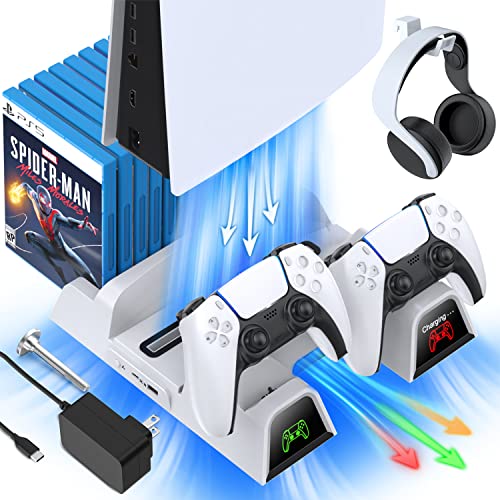
If you have a PlayStation console you should also have one of these stands. It makes it incredibly easy to organize your console and games as well as charge your controllers at the same time.
Plus it has a cooling fan to make sure your console doesn’t overheat when you have your weekend gaming marathons!
All About PlayStation
PlayStation is a video game console which offers its products for sale worldwide. Its games are quite popular among teenagers and young adults and its features are loved by many people. The first Playstation was introduced 25 years ago and has successfully maintained a great name in the market until today. Although it has faced competition from other companies, (specifically Microsoft) it is still loved by many people from around the world. One can easily get their hands on one of Playstation’s consoles by looking it up online or by even visiting a local store.
Not only that but also the games offered by them are quite gripping. You can easily find the one which suits you the best. Some of Playstation’s most popular games include
- Tekken Series
- Metal
- Dead or Alive
- PaRappa the Rapper
- Grand Theft Auto
- God of War
- Red Dead Redemption
- Uncharted
- Doom
- and many more.
Currently, models up to the PS4 Pro have been launched and the PS5 is expected to be launched very soon. All of these consoles come with certain features of their own that have been loved by the audience. So far, the PS4 PRO has the best features in terms of the quality of the graphics and processing power provided.
PlayStation: American or Japanese?
As mentioned above this is a question asked by many users of this game. It has even confused many people for a long time but the simple answer to this one is that yes, PlayStation is a Japanese product. PlayStation is produced by Sony which is a Japanese company with its headquarters in Tokyo.
Sony is a well-known company and has many sub-operations too. Sony Interactive Entertainment is the branch under which PlayStation was launched. Not only the consoles but also many games and accessories have been sold by the company.
All in all, Playstation has been a quite successful brand over the years. It surely was a great decision made by Sony to launch the PlayStation. It has undoubtedly brought a change in the gaming industry and the competition between the Playstation and Xbox has pushed the video gaming community to new heights!
The Playstation has many features that you must look at before deciding whether to buy it or a competitors console. Playstation consoles are a great way to spend the day whether you are bored or simply want to have some fun.
The Playstation console is certainly worth every penny that you spend on it and if you are someone who hasn’t tried this console yet then it is certainly something that you should consider getting.
Changes in PlayStation over time
To compete with the new products and to retain existing customers, there have been many changes in the PlayStation over the years. All these changes have been for the better and can be identified easily. These upgrades or additional features are worth it and have been the best they could offer at the time of launch.
The first-ever PlayStation was launched in Japan in 1994 and the rest of the world got access to it in the following year. With the growing popularity, the PlayStation Store was created in 2006. It has all the items related to PlayStation and also all the recently released games. If you need something, you can simply visit the site and get access to all the PlayStation items at one place. Some films and videos are also offered on the Playstation store.
Not only this but also other online services have also been provided like PlayStation Plus, Life with PlayStation, PlayStation blog, PlayStation app, and more. All of these operate separately and with the same motive of providing the best services to all of Playstation’s users. You can get all of their questions answered by visiting one of these platforms. Some of these even offer mini-games which can be played at home either individually or with friends.
Why choose PlayStation?
There are many reasons why you might choose to get a PlayStation instead of any other gaming console available on the market. One thing you must make sure of is that all the features you are looking for are present in the system that you are about to buy so that you can make the best choice possible.
- One of the most important things is the performance which is quite good with most of the Playstation models. This is especially true of the PS4 PRO as it has many great features and amazing ram which makes the playing experience even better.
- One can easily learn how to play these games as they come in a user-friendly mode. You can even learn how to use most of these games by going through the instructions.
- Undoubtedly, the games offered by PlayStation are much better and easier to handle. You can even find these more interesting because of the great gameplay offered by them.
- Multiplayer features are also available on the Playstation which makes them even more popular. You can enjoy playing these with your friends just by getting an extra controller.
- The controller offered by them is great too. It is easy to use and is perfect for the user. The controllers are also quite visually appealing making them better to have sitting around the house.
If you want to see a video comparison of the Playstation vs the Xbox then be sure and watch the video below.
Conclusion
All in all, PlayStation is undoubtedly a Japanese brand. You must ignore the rumors saying it is an American brand as that simply isn’t true.
If you are a video game enthusiast, you really only have two choices, either the Playstation or the Xbox. Deciding between the two is difficult but many people prefer the Playstation and would not ever own an Xbox.
We hope that the above-given details have helped you learn about Playstation as a company as well as see the pros and cons of the console.