
*This post may contain affiliate links. As an Amazon Associate we earn from qualifying purchases.
Have you ever been to Disney and thought that it would be amazing if Sega had a theme park? You will be happy to know that in London, Sega actually has a theme park called Sega World!
Is Sega World London still open?
Unfortunately, Sega World London is not open anymore, although it was open for a few consecutive years.
If you want to know more about the Sega World in London and the rides that were in the park you will want to keep reading. You can also watch this video to learn all about the Sega World in London.
Are you a huge Sega fan? Then you have to check out the amazing Sonic and Sega gear that you can get. Whether you want a Sonic wallet, a Sega sweatshirt, or a classic hat there are plenty of choices to choose from. You can find them all by clicking here.
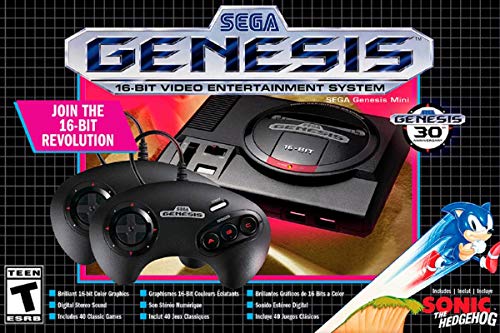
If you love Sega then you will want to check out this Sega Genesis Mini console. It comes with two controllers and even comes preloaded with 42 Games!
Enjoy these classic Sega Genesis games without having to purchase a single game cartridge!
Amusement Parks
Amusement parks are one of the best places to go for a visit to our holidays. They are among the top places to visit in any holiday list. From a child to an adult, everyone loves to enjoy amusement parks. It allows us to relive our childhood and refreshes our mind and makes us full of joy and happiness.
Sega World was one of these amusement parks. There were several parks all around the globe named Sega World and other small parks named Sega Parks. These were one of the biggest and most popular theme parks of its time. They were established in the early 1990s.
Sega World London was the largest theme park of Sega occupying an area of 109,791 ft². It opened September 7, 1996. It was like a dream come true for kids, but unfortunately, it was not a success.
Why isn’t Sega World London open?
Sega World London was the biggest indoor theme park ever created! Because of how big the theme park war, it took alot of money to operate and run on a daily basis. This is not something that Sega anticipated though, and sadly had to close its doors. Sega World London was open for three years, and was the biggest and best fantasy for every kid in the world! Sadly its profits were not what was needed, and soon after shut its doors.
Architecture
Sega World London was an amazing six-floor indoor theme park. It even had a Rocket Escalator! It was over 50 feet long, and would take the visitors around the floors with rocket speeds. It had several attractive arcade machines that were very rare, and had never been seen before in the UK. It was also a place where people could test and play Sega Arcade games as well as the newest Sega consoles. Below are the 6 levels and what was on each level.
Level 6: Admission
This was entry level. Here visitors pay for the ticket, also on this floor was a Beast in darkness motion simulator and visitors can also try the Sega Saturn consoles for free.
Level 5: Fighting Zone
Going down to level 5, this floor was full of combat fighting games, including V Cop 2 and others like non-Sega titles like Area 51. It included over 45+ games from various gaming companies.
Level 4: The Racing Zone
This floor had racing arcade games all around. From the time you entered the racing zone, you would be surrounded with over 70 games. Also there was Aqua Planet. This was a motion simulator with 3D glasses.
Level 3: The Aerodrome
Level 3 seemed to be the flying area with nearly 20 different flying action games. If you loved anything airplanes, then you needed to see this! Inside, there was the first commercial ex-RAF Harrier Jump Jet. They towed this plane on a boat through London before the opening.
Level 2: The Carnival
This floor would literally blow your mind! It held a UFO catcher (claw machines), over 80 gaming machines and 3 rides like House of Grandish, Ghost Hunt, and Power Sled!
Level 1: Sports theme
They based level 1 on sports which was the last level. It had nearly 90 sports games with the Sega store and an AS-1 motion simulator which could hold 8 players. If you wanted to play games that had to do with any sport at all, you definitely wanted to start here!
The best level?
With all the different levels to choose from, there was always a lot of debate about what level was the best one to go to. Most of the time it just depended upon what you liked and disliked. Many people would spend hours on just their one level and not even make it to any of the other levels! So the best level was the one that you enjoyed playing the most and the one that interested you the most.
History
After the great success in the arcade and console video games, Sega was making a move to open Sega’s arcade centers. Sega quickly began opening a lot of indoor theme parks all over the globe. Sega World Bournemouth was its first theme park opened in 1993. In 1996, it aimed for the largest indoor theme park in the world surrounding 100,000 square feet of the Trocadero site with an investment of nearly $54 million, housing seven dedicated indoor rides!
It opened on 7 September 1996, with mass promotions and an entry fee of $13. The opening day event was a disaster though with long queues for every ride. Customers looked at some of its rides as simple and uncreative. It seemed to be a problem for visitors to pay the entry fee as well as then pay for all the games inside.Also once you were inside you still needed to pay for food from the mcdonalds or other food places as no outside food or beverage was allowed. All of these reasons had a negative impact on the customers and most never returned,
Pepsi sponsored Trocadero with its Max Drop ride and IMAX cinema, which was the first 3D cinema to appear in the UK.
They estimated that there would be more than a million visitors in the first year of the opening just to the 3D cinema alone, but only 950 thousand people attended the entire theme park. It was so low that Sega had to lower the entry fees to attract more visitors to the park.
Decline of Sega World
The contract was signed by Sega with Trocadero which stated a three year termination agreement if Sega did not make $3.5 Million total in those three years. Sadly Sega did not make the 3.5 million needed so the park was then forced to close.
A major reason for the decline of Sega World was its inclination towards its competitors. It tries to compete with its competitors and give them a good level for competition but does not concentrate on the management of its existing network and ecosystem.
Sega World’s features were taken out and new attractive features were fitted in, including a bowling alley, fairground rides, and sports bar. Because of the large gaming area in the building, they could not keep up and fights and vandalism became a problem which eventually shut down the entire facility.
Conclusion
Now that you know about the Sega arcade world and all that it had to offer, you can now tell all of your friends this incredible information that every Sega fan should know.