
*This post may contain affiliate links. As an Amazon Associate we earn from qualifying purchases.
Have you ever met someone who would just not shut up about Nintendo? Most people call them fanboys. In this article we will go over everything you need to know about Nintendo fanboys.
So why are Nintendo fanboys the worst?
Most Nintendo fanboys are brash, loud, irrational, elitist, and toxic. It turns out Nintendo fanboys are about the worst fanboys there are. Though not every one of them behaves this way though, most do.
If you want to know more about Nintendo fanboys and why they are the worst you will want to keep reading this article. You can also watch this short video to learn about Nintendo fanboys as well.
Are you a huge Nintendo fan? Then you have to check out the Mario and Nintendo gear that you can get. Whether you want a Mario wallet, a Nintendo sweatshirt, or a classic NES hat there are plenty of choices to choose from. You can find them all by clicking here.
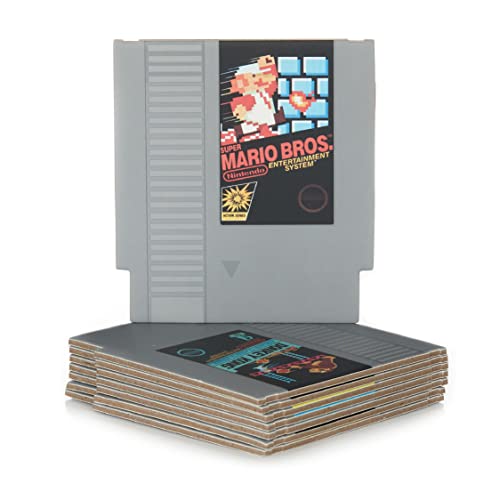
Do you love Nintendo? Then you have to check out this amazon NES cartridge drink coaster set!
This set includes 8 double sides drink coasters that look just like the classic NES cartridges.
This set is a perfect gift for the gamer in your life!
What is a fanboy?
Anyone can be passionate about anything, and it’s only fair to be able to defend what you care about. There are limits to everything, and this seems to be the one thing that Nintendo fans do not understand. There are many reasons why these ones are just so annoying. Below are some of the main reasons why Nintendo fanboys are the worst.
- They are blindly loyal
No matter how terrible the game or console or online service is, if it’s a Nintendo, you can trust a Nintendo fan to let out an excited scream and preorder it immediately. It’s more annoying that they don’t keep their joy to themselves. They have to tell everyone how extraordinary it is. Based on this, the truth is, you can’t trust a Nintendo fan to write an honest review.
- Undignified enthusiasm
Wouldn’t you be surprised to see a grown person lose their calm just because new characters have been announced for a fighting game? Well if that person is a fan of Nintendo, no matter how old they are, you will probably find them freaking out with excitement every new Nintendo release.
- The force of defense is surreal
Now, if you don’t like anything about a game, you’re probably safer changing your mind or at least keeping your dislike to yourself. If you don’t, you will have a bunch of Nintendo fans try and explain to you in the most condescending terms. They’ll tell you how you’re a bad person and how the intelligence of Nintendo is apparently beyond you. They will also try everything they can to convince you to change your mind and to just keep playing until you fall in love with Nintendo.
- The Switch port frenzy
As it stands, a game cannot even be announced without comment sections and forum posts going crazy about how they want it for their console. The problem is that their console may be underpowered.
Are Nintendo fans a problem?
The thing is, so many of these fanboys are too zealous for their own good. We all know about the royal place of Nintendo in the gaming world. The way it all looks, Nintendo would easily be the god or religion that many people would choose if it was a belief system. Among companies in the gaming world, Nintendo is king. The reason is obviously that they speak to their fans, innovate with the latest technologies, listen to gamers, explore new perimeters, and, ultimately, they steadily provide quality content to their audience. All of these are definitely highly commendable, but, Nintendo’s fanboys are a big problem.
While Nintendo does actually have the oldest and grandest of gaming entities, they also have the most paranoid and hostile fans. Their most committed fans have proven to be brand elitists, isolationist, and paranoid. They have also helped to perpetuate the fake gamers narrative.
Do Nintendo gamers think Nintendo has any faults?
For starters, the trend of console/brand elitism is actually a thing. The assumption here is that your favorite brand, in addition to being better than others, is flawless and has no shortcomings. This is chiefly a problem between PC gamers and Console gamers, but it affects other areas too. Just because you buy a game on the basis of its name does not mean that the developer will grow. If a game company can repeat the same game every year and receive the same results, they would not risk launching a new IP and spending more resources. A lot of gaming companies like Call of Duty have kept doing this. Now, while Nintendo may not deviate from their established IP’s, a bigger portion of the time, they at least try to refresh those products and bring new concepts to old favorites.
The striking thing is that fans of Call of Duty have, in the past, moved on to other franchises and titles. This is something that Nintendo’s fanbase will never do. Fans can easily get a variety of games on their hard drive that are not Nintendo, but die-hard fans of Nintendo never do this. We’ve really never seen fans of Nintendo do any kind of self-reflection with their darling Mario or Zelda franchises as fans of Call of Duty, for example, would and have done.
Do Nintendo fans own old gaming consoles?
Up until now, Nintendo fans buy obsolete NES consoles in tons just for the sake of nostalgia. This is very ironic because there are remakes of the game which go for way lower prices, and yet, they would still buy the outdated versions. The investment, collectors, and ease of use arguments could make sense, but the zealots go way beyond merely that. Even though Nintendo is changing this quite a bit with their Super NES Classic Edition as well as the inclusion of Star Fox 2, which was never released at first, die-hard Nintendo fans are still who they are. The truth is, these Nintendo fanboys have a strange and annoying worshipful attitude towards Nintendo.
The culture of gaming has survived for many years on its own. Without all the crowd craze, gaming survived, and everyone was content and happy. Now, it seems as though everyone is putting the pressure on us to become genetics, too, because that’s what the cool kids do. In today’s generation everyone wants everyone else to love what they love, but no one is willing to change.
Do Nintendo fanboys hurt Nintendo?
It is true that Nintendo fanboys are the worst because they’ve done a lot of damage to the gaming world. They keep buying the same outdated games and are more than ready to gang up and tear down anyone who brings up any criticism against their favorite brand, even if this criticism is very constructive and can enable good improvement. Their attitude only helps to ensure that stagnant ideas continue to sell in the gaming market with almost no improvement at all.
Other brands definitely have fans, and they surely have reasons to support their favorite gaming brand. What is strange is the fanaticism that Nintendo fans bring to the table.
Yes, no one is perfect, and it’s quite easy to get so caught up in something you really care about. It is possible to improve on anything though and the way it looks, Nintendo fans are not ready for any improvements. It’s just really sad that Nintendo’s strongest bone is also their greatest setback.
Conclusion
Now that you know about Nintendo fanboys and how annoying they are, you can easily see why Nintendo’s fans are not ones that you want to talk with about gaming. They do not see any room for improvement, and most do not see anything wrong with anything that Nintendo does. If Nintendo fans would just be normal, the world would be a far better place.