
*This post may contain affiliate links. As an Amazon Associate we earn from qualifying purchases.
If you’ve ever watched an award show or saw on TV that someone had a gold or platinum record then you might have wondered if those records actually play. We also wondered the same thing, so we did some digging and found the answer.
Do gold and platinum records actually play? Most gold and platinum records will actually play music and work with a record player. That is becuase the majority of them are actual vinyl records that are just dipped in metallic paint.
If you have a turntable or lathe that accommodates a 14-inch disc (the size of lacquer masters) you can play gold or platinum records just like a normal record.
These are real records painted with gold and then stamped with the groove. The groove that is stamped is rarely the same record that the award is given for. Bob Shane, the lead singer for the Kingston Trio, once played his gold record for Tom Dooley after it fell off the presentation board.
A gold or platinum record is an award based on financial success. In the United States, the Recording Industry Association of America (RIAA) awards certification based on some requirements like number of sales, consumer demand, streaming figures and much more.
List of certification:
- Gold
- Platinum
- Multi Platinum
- Diamond
Do you love playing your vinyl records but your record player has seen better days? Well, you are in luck! There are tons of great record players that not only have great sound quality but also won’t break the bank. You can find them by clicking here.
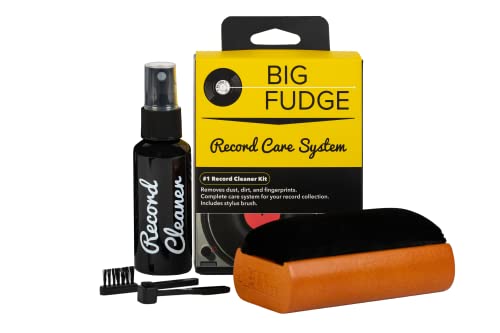
If you love records and record players, you must get a record-cleaning kit like this one. It is designed to ensure that your records stay in excellent condition to last you for decades.
Get this cleaning set and keep your vinyl records in perfect condition!
How do you get a gold or platinum record?
If your single or album has sold more than 500,000 copies then that song or album is considered to be a gold song/album. If your single or album has sold 1,000,000 copies then it is considered as gone platinum.
These are the general requirements for albums and singles. The Recording Industry Association of America (RIAA) has some other requirements different for albums and singles.
Requirements for an album:
- Each permanent digital album or physical album sale count as one unit for certification purposes.
- 10 permanent track downloads from the album count as one unit for certification purposes.
- 1,500 on-demand audio and/or video streams from the album count as one unit for certification purposes.
Requirements for a single:
- Each permanent digital download counts as one unit for certification purposes.
- 150 on-demand audio and/or video streams will count as one unit for certification purposes.
History of gold and platinum record awards
When they first started doing awards, the record awards were only gold and silver. The record was presented to an artist by their own company to recognize their sales achievements.
Regal Zonophone awarded the first silver record to George Formby in December 1937 for the comedy song “The Window Cleaner”.
RCA Victor awarded the first gold record to Glenn Miller and His Orchestra in February, 1942 for the sale of 1.2 million copies of “Chattanooga Choo Choo”
Some other examples of a company award is the gold record awarded to Elvis Presley in 1956 for one million units sold of his single “Don’t Be Cruel” or Decca’s gold record to Jerry Lewis for “Rock-a-Bye Your Baby with a Dixie Melody.”
In 1958 the Recording Industry Association of America introduced its industry-level gold record award program for any kind of record’s album or single, which achieved one million dollars in retail sales. Sales were restricted to USA based record companies and exports to other countries were not included.
In 1976 the platinum certification was introduced for the sale of one million units for the album and two million units for single. The gold award certification was also changed to sales of 500,000 units for albums and one million units for singles.
Gold and platinum records certification
There are so many different types of certification for gold and platinum records. Most of them are:
- RIAA certification
- Digital media certification
- IFPI certification
- IMPALA certification
RIAA certification
The Recording Industry Association of America (RIAA) established the first official designation of a gold record for a single in 1958 in the United States.
Perry Como’s hit single “Catch a Falling Star” was the first gold record certified by the RIAA On March 14, 1958. After four months, the Oklahoma soundtrack was certified as the first gold album.
RIAA introduced the platinum certification in 1976. It was first awarded to the Eagles for their compilation album “Their Greatest Hits (1971–1975)” on February 24 ,1976.
As sales of music continued to increase over time, RIAA created the multi-platinum award in 1984. After many people started hitting the multi-platinum level, diamond awards were introduced in 1999 because the sales of albums and singles continued to skyrocket as the favorite pastime in the United States became listening to their favorite artists.
Digital media certification
In most countries, certifications no longer apply solely to physical media but now also include sales awards for digital media. The recognizing digital downloads in the U.S. and U.K. became a part of the awards beginning in 2004.
Ringtone downloads of songs became certified by RIAA in June, 2006. Digital certification in the USA, the UK, and Germany also include on-demand streaming services like Apple Music, Spotify, Tidal, and Napster since 2013.
IFPI certification
In 1996, the International Federation of the Phonographic Industry (IFPI) was founded. The IFPI grants platinum Europe awards for album sales more than one million within Europe and the Middle East.
The multi-platinum award is granted for sales in successive multiples of one million.
IMPALA certification
In April, 2000 the Independent Music Companies Association (IMPALA) was founded to grow the independent music sector and promote independent music in the interests of artistic, entrepreneurial, and cultural diversity.
In 2005, IMPALA launched their first sales award. The award levels are silver, double silver, gold, double gold, diamond, platinum, and double platinum.
Have gold and platinum lost their luster?
For 58 years there were quite simple rules for going gold and platinum. Sell 500,000 units for albums or singles and get a gold record. Sell one million copies for albums or singles and get the platinum record.
In recent years because of the rule changes and new guidelines put out by the RIAA many people believe getting a gold or platinum record just isn’t as hard as it used to be.
The streaming services like Youtube, Spotify and Apple Music are very popular. People will often download a digital song or album so RIAA’s new guidelines are not only the actual sales of records but also include songs downloaded or played on these streaming services.
For YouTube, playing 10 digital track downloads is the equivalent of one album.
For Apple Music, Tidal and Spotify 1500 plays count as one album sale. So for these services 750 million streams would be credited with a gold record.
Many people believe because of how easy it is to listen to tracks over and over on your phone or other devices that it makes having a gold or platinum single or album not as big of a deal as when it required people to purchase physical records, tapes, or CDs. That certainly could be true as people can listen to complete albums from all their favorite artists for extremely cheap vs what it would have cost many years ago to buy all of those same albums.
With Apple Music only costing $14.99 a month for 6 people that means each person is only paying $2.50 a month to listen to all of the music that they want! That is far cheaper than paying $15-$20 for a single album!
Streaming services are certainly here to stay but whether the gold/platinum distinction is worth much anymore is certainly debatable.
Are records making a comeback?
Records were popular in the 1950s until the 1960s and 1970s. As tapes became more popular the larger records quickly began declining in popularity however because of their durability many people (including myself) grew up playing records well into the 80s and 90s!
Once CDs were released it seemed to be the final death knell of records.
However, in recent years vinyl has started to become popular again. People appreciate the nostalgia that comes with listening to a record player and the sound quality of a good record is definitely hard to beat.
With music streaming being all the rage all physical media has essentially disappeared… except for records! It is possible that they are making a comeback because they literally won’t go away!
Records are so durable that they have lasted for many decades and still play just fine. Since they have seemingly “always” been around then there are many different generations that have an attachment to them and the experience that playing a record brings.
Why are vinyl records making a comeback?
There are several reasons vinyl records are making a comeback. A few of them are:
- The cool factor: According to the record industry’s research site, MusicWatch, half of the current record buyers are under the age of 25. Some millennials have made an art of taking dated concepts like fedoras and ponytails and making them relevant and cool again.
- Vinyl Collectors: According to the MusicWatch research, 27 percent of record buyers are more than 36 years old. That means they are probably attached to vinyl records and are adding it to their personal collection at home.
- The Listening Experience: It is true many people are listening to music by using streaming service or digital downloads. It is also true that vinyl lovers are still spending time and money on dedicated Hi-Fi setups in their homes. They will often spend more money on buying quality speakers, turntables and stereo receivers to try and have an authentic listening experience.
- Sound quality: Manu experts feel that the analog vinyl sounds far superior to digital audio. There are better digital playback formats available but you will often have difficulty finding them. On the other hand, vinyl is available in online stores and can be found in yard sales and second hand shops all over the country.
Conclusion
Gold and platinum records will actually play on a record player. However, it is often not the song or album that went gold or platinum that is actually on the record.
In recent years, gold and platinum awards have lost quite a bit of their luster because of the changing rules. These rules make it much easier for artists to get those awards and for many artists to get them. You used to have to decide between which record, tape, or CD you were going to buy.
With the introduction of streaming services you can now listen to every single album that every artist ever releases for only a few dollars a month!