
*This post may contain affiliate links. As an Amazon Associate we earn from qualifying purchases.
Do you own an Atari 800 and were thinking about selling it? Maybe you found one for a good price and wanna know if you could resell it and make some money. Well you will want to keep reading as we have the answers to these questions and more.
So is the Atari 800 worth anything?
Although people would like to say the Atari 800 has a lot of value, it just simply does not. The highest price one has sold for is under $150 and most only sell for around $50.
If you keep reading, we will go into depth of the Atari 800 and how the value is determined for the console.
If you are an old-school Atari lover then you have to get a classic Atari T-Shirt to show it! To see the most popular Atari T-Shirt retro designs that will stay classics for years just click here.
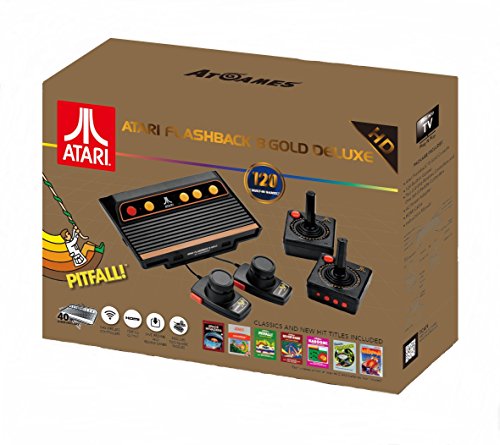
If you love all things Atari then you have to check out this awesome Atari Flashback console.
The Atari Flashback 8 comes with two wireless controllers (YES, WIRELESS!) two paddle controllers, and 120 authentic Atari games.
What is the value of the Atari 800?
Anyone who still owns a copy of this game will wonder this question a lot. The Atari 800 was first released over 40 years ago and at the time, it was a must-have. A computer built for gaming was a new innovative development and a lot of people wanted one.
If you fast forward forty years in the future, such systems have become common. In addition to that, they have become much more advanced.
The current gaming systems have made the systems of the past be forgotten, but some of them still exist. While Atari gaming systems were mainly for games, the Atari 800 could serve as a game console. This caused the Atari 800 to be less popular than the other Atari systems.
Regardless, the system was still a favorite with users as it could serve more than one purpose.
The game was discontinued many years ago and production was closed. Any Atari 800 systems still in existence are pre-owned and it will be difficult to find them in a shop.
In situations like these, those who own such systems will wonder if it has any financial value in the current market. Items that are rare and difficult to find can sometimes be financial goldmines, but they can be worthless in some cases as well.
Those who still have an Atari 800 may be looking to make some extra money while some people may want to own one for their personal collection. No matter the reason for wanting to know the value, it is important.
The value will determine if an owner will be willing to part with it and if a collector will deem it worthy of collecting. Sadly, the Atari 800 is not worth much in the current market.
There are varying reports on the worth of the Atari 800 as there are different prices recorded for different consoles. However, the maximum price recorded is less than 150$, and this was at a private auction.
The online stores also have some of them for sale but they cost less than 50$. This is because there is a high cost when shipping it. Thus, the price needs to be low to reduce expenses related to it. So if you want to get one, it won’t cost too much.
If you are looking to sell one, it will not fetch a fortune but it can earn you a little money. The accessories such as cartridges also sell separately, but like the console, they don’t cost very much at all.
What determines the value of an Atari 800?
We stated earlier that there is no fixed value of an Atari 800. The price varies for all recorded sales and you may wonder why. Some factors determine the value of an Atari 800 and knowing them can help ensure that you can get the best value for your Atari 800.
Several factors determine the value of an Atari system, but we will only look at a few.
Edition
Most products have different editions, usually indications of their release time. Different editions have a different update and different features. This means that there are things found in an edition that will not be found in another edition.
When these are present, it can improve the value as it makes the console more exciting.
In some editions, there are special features or Easter eggs that make owning them more interesting. There are also limited edition consoles. Consoles that only a limited number were ever made. This makes owning one of those consoles a proud accomplishment.
The consoles will be rare and owners maybe even fewer, and as such, the value of the console will increase. In the case where you want to sell this item to a collector, the value will be high, as a collector will value the console more than a regular individual.
Condition
The state of the Atari 800 will also determine the value of the console. The product was discontinued a long time ago and so most of them will be in poor condition by now.
A collector or a normal buyer will always value a console that is in good shape more than one that looks terrible. Modifications and repairs will also reduce the value of the product. As a result, a mint condition Atari 800 will have a higher value than any other console available.
When selling to a collector or an enthusiast, the condition of the console will also play a role in determining the value. If there are marks or scratches on the console, it will likely reduce the value. The rarest find will be a console that is unopened and if you have this, it will fetch more money than any other Atari console in existence.
The unopened console will guarantee the mint condition and functionality.
Location
The distance between the seller and the buyer will also determine the value of the console. If transporting the console will not involve transportation, then the price will be lower.
If transportation costs are involved, then there will be a higher, but fair price for the console.
The buyer
The person buying the console will also determine the value of the console. If the buyer is an enthusiast or a collector, he will likely value the console more than a normal buyer. If the buyer is wealthy, he may not pay attention to details, and simply match your asking price.
Compare this to someone who saved up money to buy the console as a present.
Conclusion
Although the Atari 800 is not really worth a lot of money right now, there are a lot of people that are interested in this, and that could make the price go up. No matter where you go to buy the console, you will want to make sure you are getting a good deal. If you follow the steps above, you should be able to purchase a great console, and get one at nearly half the price of retail.
No matter what you decide, we are here to help you, and see you succeed. If you already own your console, you may want to check out these games for the atari 800.
If you do choose to purchase the Atari 800, there are so many games that you will be able to play, and just go and hand out.