
*This post may contain affiliate links. As an Amazon Associate we earn from qualifying purchases.
Since its launch back in 2011, The Game Boy Advance now has over 1000 games. Unfortunately, the system didn’t stick around for long, but it created a great lineup for other games.
So why are GameBoy Advance games so expensive?
Today, GBA games are quite hard to find, and that is the main reason that the price has stayed so high. The other main reason is the popularity of the games and the fact that Nintendo rarely makes and distributes large amounts of any of its titles.
So if you want to know more about this topic, you will want to keep reading this article. You can also check out the video below if you prefer to learn that way instead.
Are you a huge Nintendo fan? Then you have to check out the Mario and Nintendo gear that you can get. Whether you want a Mario wallet, a Nintendo sweatshirt, or a classic NES hat there are plenty of choices to choose from. You can find them all by clicking here.
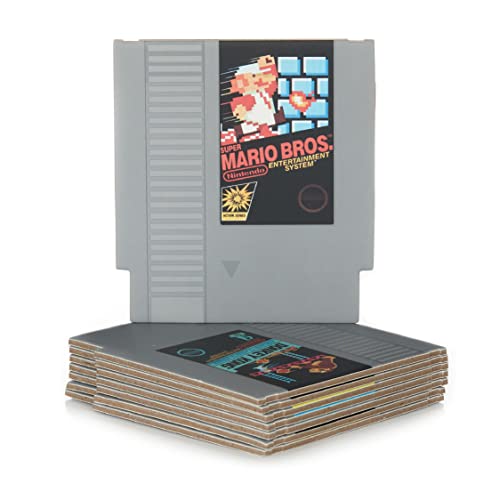
Do you love Nintendo? Then you have to check out this amazon NES cartridge drink coaster set!
This set includes 8 double sides drink coasters that look just like the classic NES cartridges.
This set is a perfect gift for the gamer in your life!
Expensive GBA games
Games offer a unique way to spend free time, which is quite involving and entertaining at the same time. The GameBoy supports many different kinds of play, and over time, new technology has introduced new game consoles such as PS and Xbox.The GameBoy Advance is quite a new phenomenon which is very handy and can be used for many hours without the need for a recharge.
The device is a little expensive, but can easily be purchased on the market. It comes with a small type of disc that is installed, which contains the game, and every game has a different disc. GBA games prices are highly dependent on how popular the game is, in terms of characters among the players.
There is a large variety of GBA games available for the people in the market, and new games are launched each day. Despite the massive competition among game companies around the globe, many GBA games still hold up remarkably well.
Why are GBA Games not made anymore?
Awesome games are generally pretty expensive, and that goes for GBA games as well.
It’s hard to get some GameBoy Advance games, because they are not produced anymore. The system is old and if you don’t own a GBA or the original DS, you can’t play any of the games.
Most users tend to find the GBA titles on the 3DS and Wii U virtual console, but that is a trickle, not a torrent. If you have these GBA titles, you will have to dig deeper into your wallet for some cold, hard cash since the game isn’t being produced anymore. Therefore, the few copies available cost a fortune.
Any older game that is highly desired calls for a high price, especially when the supply is low or halted. Players still look for GameBoy Advance games, yet Nintendo stopped making them, so supply and demand are the main reason prices are high.
The Game Design
The GameBoy Advance games are expensive because they come in cartridges. Games in rounds are costly to make. They even cost more to make than CDs/DVDs, which most new games come in.
For those who purchased the NES, SNES, and N64, the games for those systems cost $50 dollars or more. The loss is attributed to the many components that are needed to make a cartridge. Nevertheless, for the love of the games, the price isn’t a problem for many, and the demand is high for GBA games.
Also, you have to remember that the age of the GBA system influences the price. And the fact is that more of the games are old and break as time goes on, creating scarcity. The total number of GameBoy Advance systems can only decrease with time. From the time of the launch to when the production discontinued, GBA has done nothing but decrease in numbers.
GBA game discs are expensive from the time they are made because they have so much information compacted into such a small game. Generating a copy is quite impossible, and they aren’t manufactured anymore. And because they aren’t that easy to find,over the years, they became old. And on top of that, people liked to play them on their DS making them more popular.
Why Nintendo is a Famous Company
Nintendo has a number one monopoly on the handheld market, so they can charge whatever they like. But you can’t blame Nintendo for the high price of the used GameBoy Advance games.
They have nothing to with the high prices, other than discontinued production, causing your local stores to resell at high prices.
Blame your local stores for charging the high prices on old games despite their popularity. And the truth is, GameBoy Advance games are really rare, so the reseller figures that they must be worth more than they are.
The high price can also be blamed on Nintendo affiliation game Companies such as Gamestop owned by Barnes and Noble. Funcoland one of their games is very expensive for GameBoy Advance players.
The price jump is justifiable with Nintendo buying Funcoland and taking away that monthly list that most players are accustomed to. Gamestop reserves the right to charge outrageously high prices on their games expected to be cheaper at other places.
You will still find GameBoy Advance users shopping for them, especially for used games, and those looking for games to add to their collections.
The GameBoy Advance isn’t Extinct yet
The GameBoy line has become such an essential part of the console history. Today, most people are nostalgic about the handheld console for those who grew up in the 1980s and 90s.
The GBA games have become pretty collectible, even though most of them are being discontinued after 30 years of adventure and fun. A lot of the games have become pretty rare, by reason of the price.
You now know why the GameBoy Advance disc is quite expensive. There are lots of reasons, as described above! The GameBoy Advance manufacturer is a highly regarded company that enjoyed a monopoly on the handheld market thus charging high.
The price is also influenced by the high piracy with emulators over the internet. Luckily, piracy was nowhere near as bad as that of PSX in the UK, where every PSX was chipped, and about 25% of the games were fake, thus pushing prices. All GBA games come in small to high-density cartridges, which is quite an expensive call for more bucks from users.
Like most entertainment companies, Game Corporation places a significant margin on games, which cost them very little to make for which there is no excuse. At some point, GBA games should not have cost more than first hand PlayStation games, which are even more significant. The whole concept of the GameBoy Advance should be that kids can afford the games.
Conclusion
Now you know why the GameBoy Advance games are expensive. And as described above, there are a lot of reasons. You also have learned about the reasons why Nintendo discontinued the product. And after reading this article, you’ve probably decided to keep the GameBoy Advance games that you have!