
*This post may contain affiliate links. As an Amazon Associate we earn from qualifying purchases.
Have you been playing Rummikub recently and wondered how someone can win almost every time? Maybe you want to win sometime but you just can never seem to do it!
Well, in this article we will go over everything you need to know to learn how to win at Rummikub.
So how do you win at Rummikub?
Although winning Rummikub takes some luck and skill, the most important thing is to always be focused on the game. If you are focusing on what you can lay down, and how to get rid of your bigger tiles, then there will be a good chance that you will win.
If you want to know more about how to play Rummikub you can keep reading this article. You can also watch this short video to learn how to play Rummikub if you have never played it before.
If you love board or card games then you have to check out the game called Throw Throw Burrito! It is a fun fast-paced game where you throw squishy burritos at other people you are playing with! You can learn more by clicking here.
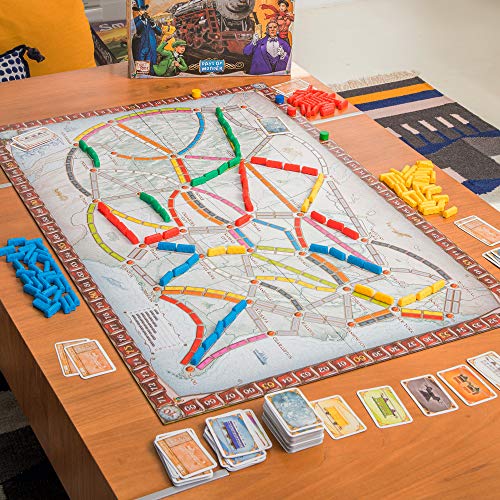
If you love games then you have to check out Ticket To Ride! This fast-paced board game will give you hours of fun with family and friends as you gather train cars and try to take over the board!
Ticket To Ride has many different variations as well so you can play across a variety of different maps.
5 Helpful Strategies (Tips & Tricks) For Winning Rummikub
There are many different good strategies when you are playing the original Rummikub game. Some of the following tips & tricks will help you win the next time you play Rummikub.
You don’t have to use all of these strategies to win but using a combination of these ways will help you get better at the game.
1. Save Some Tiles To Play
When you first play your opening set or sets it is a good idea to save a few of the tiles that you could lay down. Saving a tile or two in the player’s rack that can go on the table at the beginning of the game will allow you to continue to play one tile every turn while the other players are forced to draw.
Other people prefer to play the opposite way and draw a bunch of tiles from the pouch (or draw pile) at the beginning of the game before playing their initial set. If they do this, they have a better chance of drawing the wild and getting what matches their hand rather than an opponent playing on the tiles they laid down.
2. Get Rid Of High-Value Tiles
You should always get rid of all your highest-value tiles first so if you still have tiles left, if you end up as the loser of that round, the winner does not get the highest score, and you do not go very far in the negative.
In Rummikub at the end of each round the losing players get a negative score for any remaining tiles on their rack so playing the highest-value tiles at the beginning of the game will help you not get as many negative points if you lose.
The winner of the round gains the total of the minus scores as well. So by getting rid of your high-value tiles you are saving yourself negative points while also making sure the winner’s total is lower than it could have been,
By keeping the winner’s total score lower you can prevent them from winning the game entirely or even give yourself a better chance to win in the next round.
3. Always Stay Focused
One of the best strategies for winning the Rummikub game is to make sure that you focus. This is because you can’t win the game without thinking two or three times before making any move.
If you move the tiles and then don’t remember what you had planned because you lost your focus you will have to place the tiles back in the original positions and then draw 3 tiles as a penalty.
Rummikub requires your full attention and a unique combination of tactical thinking.
When playing the classic Rummikub game you will need to continuously think of the best way to rearrange and add your tiles to the table to create a new set of tiles with the ones you add from your rack.
You should also keep track of the tiles that you’ve already used because it will help you win the game.
4. Don’t Be Afraid To Rearrange
After you have played your initial sets of tiles to “get out” you can then rearrange any tiles on the table to make additional places for you to play your tiles. By rearranging the tiles on the table and creating loose tiles that you can match with the ones on your rack you can play more tiles in a turn.
One word of caution when it comes to rearranging though is that you need to make sure that you think enough ahead so you know where each tile will go. If a Rummikub player ends up with incomplete runs or sets and can’t figure out how to use them they will be penalized.
A player that does not complete the rearranging or manipulating the tiles on the table into sets or runs by the end of his turn must return the original sets, remove the tiles that they played on that turn, and also draw three tiles as a penalty!
So although rearranging the tiles in the middle can help you win a round make sure you fully think out the idea before you start moving things.
5. Watch Out For The Time
In Rummikub, there is a time limit for how long you can think about creating legitimate sets or new runs on your turn. Typically the time limit is two minutes per turn but in the case of a group who are new to Rummikub you might want to make the time limit a little bit longer.
Since there is a time limit on your turn it is a good idea for Rummikub players to be thinking about the moves that they can make while other people are playing. In the early stages of the game, you won’t need all of your time but as the game progresses and you get closer to the end of this classic family game you will likely need far more than the time limit to think about your next moves.
The only way to get this extra time that you will need is to split your attention between watching the moves that the other players are making and thinking about what you want to do on your next turn.
Although most people do not know this, there are actually multiple variations of how to play Rummikub. The most popular one is the Sabra Rummikub Version. No matter which game you play, you’ll end up getting this game on your table.
If you’ve already bought this game, then you might have an instruction book in it. You will want to read it carefully, and you’ll end up knowing a lot of tricks and traps about this game that others may not.
Can Anyone Play Rummikub?
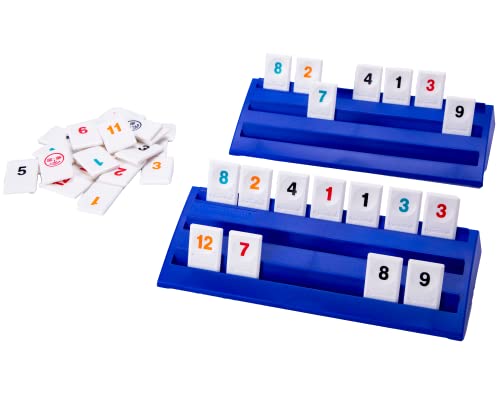
Rummikub is a tense competition game that can be enjoyed by everyone. Many kids, teenagers, and adults can enjoy the game without any problem.
Just because it’s a game for all ages though, doesn’t mean only luck can help you win the games.
It also requires you to have and use some skills to make sure that you have the opportunity to win each game of Rummikub.
How Long Does A Game Of Rummikub Take?
There is no time limit set for you to finish the game, but you’ll have one to two minutes to think on your turn and then draw a tile if you are unable to play. If you play the international version of the game though, during your turn you can take as long as you want as most people do not like to feel pressured while playing a laid-back game.
This has helped the game become popular around the world as people like to sit back and enjoy playing a relaxing game of Rummikub.
In general, it will take 60-90 minutes to play the game of Rummikub if you follow the rules of having different rounds where the total tile value on each round either gets added to the winner’s points and subtracted from the losers’ points. If instead you play where each round is a game and the person who goes out first is the winner then each “game” will take 15-20 minutes.
Exactly how long it will be before the end of a game will depend on the skill of the players as well as exactly how you set-up the game.
For example, the game will take considerably longer if you play by the rules as everyone will have to add up the tiles left on their rack and then give the final tally of the scores to the winner. Since players can gain and lose points on every round playing this way can cause the game to take a bit longer to finish.
Can You Use A Joker In Your Initial Meld In Rummikub?
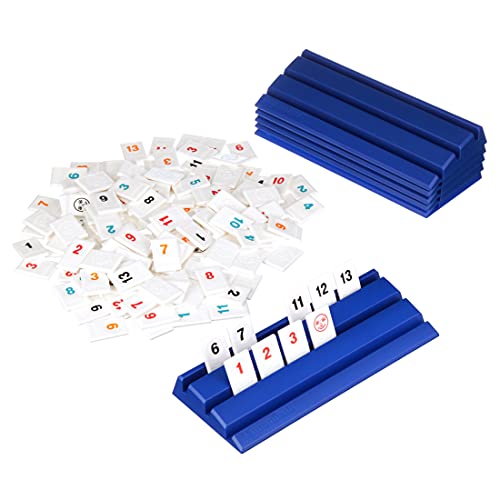
If you want to “get out” in Rummikub the value of the tiles that you lay down must equal 30 or more. If you are struggling to get enough points with the tiles on your rack because you are missing colors or need one tile to make the sets of runs that you need to get out you might want to use a joker.
But can you use a joker tile in your first sets or runs when you want to get out?
According to the official rules, you actually can use a joker in your initial meld or melds to get out. So if you have a joker on your rack feel free to use it to help you make your first sets or runs.
The joker can take the place of any number or the different colors of the tiles. It is 100% wild and can be used in any way that you like either when you are getting out or when you are rearranging the table.
One thing that you need to keep in mind is that is, you shouldn’t leave the joker on your rack without using it. Otherwise, at the end of the game, it will have a numerical value of 30 points. So you will lose 30 points and the winner of the round will gain 30 points.
Can You Play Rummikub With More Than 4 Players?
According to the rules of Rummikub, the maximum numbers of players that can play the game are “4” with 106 tiles containing two jokers and 4 colors.
The numbers that are written on the tiles are from (1-13) digits, and there are only two copies of each color. Although playing with more than 4 players isn’t possible, if you want to play with 5 or 6 players, you will simply have to introduce your own rules of the game.
If you do this, it is possible that more than 4 players. Another way to play with more than 4 players is to simply combine two Rummikub games together which will add more tiles. If you want to know more about this, you will want to read this article.
Is Rummikub Just Luck?
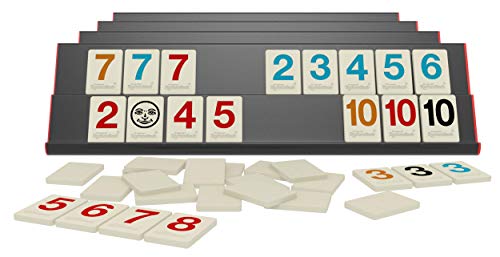
Although the game is luck dependent, it does also take some skill to play the game. It is a big argument about whether it takes more luck or skill to win at Rummikub.
For most people though, it is a balance of skill and luck that make them win the game.
Who Goes First In Rummikub?
Before the game begins, every player will draw one tile from the pile. The person with the highest number on their tile will begin the game. Play then proceeds clockwise from that person around the table.
From there everyone will replace their one tile, mix the tiles and then draw their 14 tiles to begin the game.
How Many Pieces/Tiles Do You Start With In Rummikub?
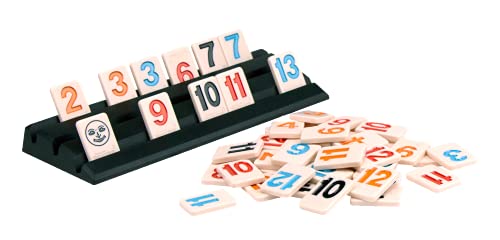
There are three versions of the game, and each version has its own rules and regulations. Every single Rummikub game does come standard with 104 tiles in the pool with an additional 2 jokers.
This makes the total number of tiles 106.
To play Rummikub you will start off with drawing 14 tiles per player but if you can’t play an opening meld or melds and get “out” then you will have to continue to draw until you can.
How Much Does Rummikub Cost?
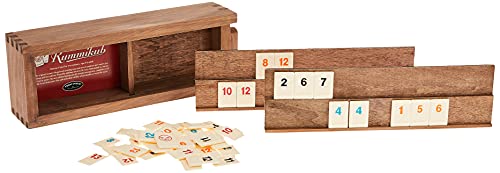
There are different prices of Rummikub and obviously, they vary considerably depending on which game you are looking to buy. In general, you can expect to pay between $15-$25 to purchase a Rummikub game. However, antique versions of the games can sell for far more.
Some of the most popular Rummikub games are:
| Noble Knight Games Rummikub (1980 Edition) | |
| Noble Knight Games Rummikub (Large Numbers Edition) | |
| Boardlandia Rummikub | |
| Noble Knight Games Rummikub (Tournament Edition) | |
| Dicey Goblin Rummikub |
You can choose one of the games above and purchase it or choose from many of the other popular versions available The best place to buy any of these games, including the regular Rummikub game is right here.
You will always want to remember, practice is the most important part of this game, and without practice, you won’t be able to win a single game.
Can You Play Rummikub With 6 players?
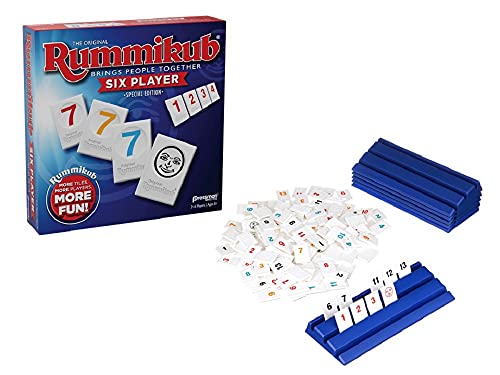
Although you can play with 6 players, you will have to add another 53 tiles to the 106 tiles to make things perfect for gameplay. It is always a great idea though to play with only 4 players as this is how the creators of the game intended it to be played.
You can play Rummikub with extra players by either buying an extra set and then combining them or by purchasing a Rummikub set that is designed to accommodate up to 6 people. If you have more than 6 people you will want to purchase multiple sets.

Is Rummikub Skill Or Luck?
Rummikub is a super fun game to play. If you have just started playing it, or have been playing for years you know just how fun this game is. Not only is this game fun, but it is popular all around the world.
Because it is popular, there are many different people who grew up playing with different rules. While there is only one set of official rules for the game, most people have their own variety that they play by.
When you move up towards a more professional level of playing though, you may be wondering if winning is skill or pure luck. Maybe you are just playing with your friends and they always seem to win and you want to know the secret.
Rummikub is a game that takes skill and luck in order to win. While you can win Rummikub with pure skill, luck certainly helps.
The best players in the world use skill to win the game, and say that luck is not involved. While they may claim this, if they draw the wilds when picking their hands, they will have a better chance of winning than if they do not.
On the opposite end, using skill when playing Rummikub is extremely important. There are many strategies that you can use and knowing when to use them can help you win.
There is no denying that winning Rummikub takes skill. The question is just how much skill you need if you are playing against your family.
If you are playing Rummikub for fun and not professionally, there is probably a lot more luck that goes into winning the game than pure skill. This is because you do not know all of the different strategies, and when to use them. This makes the games more dependent upon luck rather than skill.
Is Rummikub Good For Your Brain?
Today, there are many people who sit and work at desk jobs or at home on their computers. These people make up a big percentage of employees and they are looking for ways to keep their brains smart.
While there are apps that can help improve brain function, you may be wondering if there is something off-screen that will work for you. Would Rummikub help improve your brain?
Rummikub is good for your brain as you need to think and problem-solve in order to play and win the game. You will also need to remember people’s moves and how your tiles will fit onto the board even when someone manipulates the board before it is your turn.
Rummikub is such a fun game, and the fact that it is good for you is just one more reason to play. Even though it may not be as popular of a game as an Xbox or PlayStation, Rummikub will help your cognitive abilities.
There are many board games that are good for your brain but Rummikub is one of the best. This is because the game is always changing with every person’s turn, and what you think you can do now will change with every player’s turn.
Each player manipulating the board will make you have to think of the fly and keep track of what move you can make when it becomes your turn. Not only that but the added level of urgency as you have a time limit for every turn you take.
Some people do not use a time limit like they are supposed to when playing the game, but the time limit makes people think ahead for their turn and move quickly. It also helps the game move faster when you get down to only a couple of tiles left in each person’s hand.
There have been many times that the timer has changed who the winner was because the person did not think ahead enough to get rid of their last tile before time ran out.
How Many Points Do You Need To Lay Down In Rummikub?
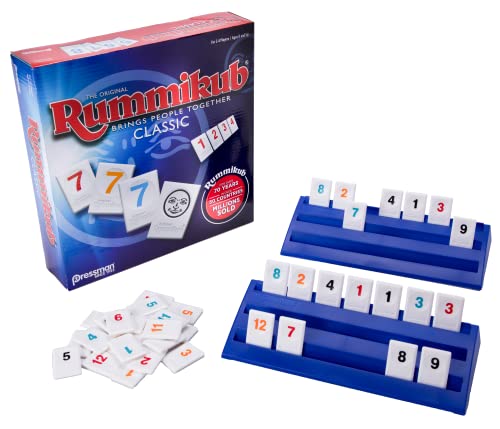
No matter if you have just started playing Rummikub, or if you have been playing for years, the rules are the same. You originally draw tiles to make up sets or runs.
These sets and runs are officially called melds. You will lay down these melds in order to be able to play on other people’s tiles and lay down. How many points do you need though in your initial meld?
Your first meld made up of either sets or runs must equal at least 30 points. If you do not have 30 points, you will need to draw one tile every turn until your meld or melds can equal at least 30 points.
If you do not have 30 points and it seems like you cannot get anything that ever matches, you are not alone. There have been many games where you can draw the entire game and never get a meld that is worth at least 30 points.
While this is definitely not ideal, sometimes if you get your initial meld at the end of the game, you can even win. This is because you will have all of the tiles on the table to play from when you can begin to manipulate the table.
Who Invented The Game Of Rummikub?
With Rummikub being so popular and so many people playing it, you may be wondering who created the game. Rummikub is a mixture of multiple games with its own twist thrown in.
Because Rummikub isn’t like any other game you have ever played, it may take you a while to get used to the rules of the game. The game is very well thought out and the game itself is extremely easy to learn and play.
Rummikub was invented by Ephraim Hertzano. He was so dedicated to the game that he even made the first set of Rummikub tiles in the backyard of his home.
He was a Jew that was born in Romania and migrated to Israel in the 1940s. Even today the game is extremely popular and sells thousands of copies every day.
This is just proof that if you have a dream you can achieve it no matter how young you are. While it started in his backyard, the game quickly became a hit. Today it is manufactured all around the world with over fifty million games sold.
Conclusion
Now that you know how to win at Rummikub, you can take what you have learned and go and show all of your friends and family that you are good at playing Rummikub.
If you do not own a Rummikub game yet, and you need to practice this is the best place to buy one. You should own one because everyone knows that practice makes perfect.