
*This post may contain affiliate links. As an Amazon Associate we earn from qualifying purchases.
For beginners, PlayStation is a video game console made by Sony. It is dedicated hardware used to play video games. It was first introduced into the markets in 1994, and there have been 3 subsequent versions (PS2, 3 and 4) with the next version PS5 expected to be released sometime soon. These gaming consoles are computers built especially for gaming purposes.
Of course these consoles aren’t good for anything if you don’t have games for them!
The games for Playstations (really all consoles) are normally quite expensive especially if there are new releases but why are these games so expensive?
Playstation games are expensive for a few different reasons with the main ones being:
- They are expensive to make
- Profit margins
- Cost to produce physical media
- Supply Chain
Each of these and other reasons all have an effect on the end price and result in the games being relatively expensive to purchase.
In the rest of this article we will discuss those reasons in more detail so you can understand why games are more expensive.
If you love PlayStation you need to check out this amazing game room light decor. It looks just like the buttons on the PlayStation controller and the light reacts to the music that you are playing as well! You can check it out by clicking here.
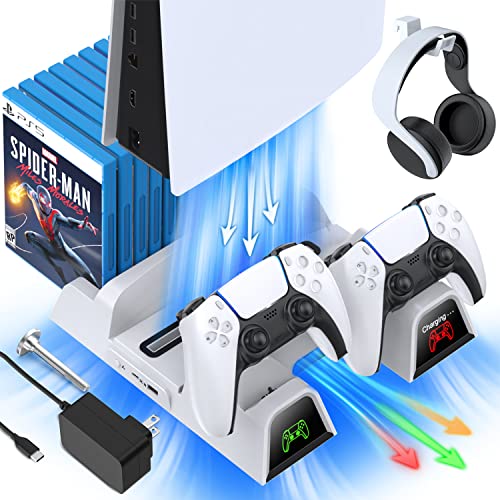
If you have a PlayStation console you should also have one of these stands. It makes it incredibly easy to organize your console and games as well as charge your controllers at the same time.
Plus it has a cooling fan to make sure your console doesn’t overheat when you have your weekend gaming marathons!
Some reasons for the high prices of PlayStation games
There are a variety of different things that go into the final price of a Playstation game. Each of those build on each other and ultimately raise the price quite high after everything is considered.
Some of the most common causes of the higher prices are:
The budget for developing a game
Developing a game that will be a hit among gamers, is not an easy task. One needs the utmost creativity while developing the storyline and characters of the game. Adding smooth graphics to it is a different ball game altogether. When you look at it from the developer’s perspective, the cost of the game doesn’t seem high at all.
For the sake of comparison, consider the budget of the blockbuster movie Slumdog Millionaire – it was about $14m. The budget of the game Grand Theft Auto IV, which released around the same time was estimated to be over $100 million. A game publisher has to pay to develop the game for a particular company’s console and also for the duplication of discs. Thousands of hours of R&D go into the development of a single game.
A game is a result of the combined efforts of some of the finest animators, programmers, artists, and many others. While the development costs keep soaring, isn’t it only justified to set the game prices accordingly?
After the development of the game, a considerable amount of money is spent on marketing and promotion. The final amount paid by the customer needs to be divided between the retailer, the publisher and the marketer. Launching a game is a huge financial risk. Thus, it is no surprise that games cost so much.
Profit Margins
Most consoles have virtually no profit margins on them and that is true whether you are talking about the Playstation, Xbox, or Nintendo consoles. Most of the consoles are sold very close to cost so to make money Sony has to charge more for accessories and games so that they remain profitable.
Now some people might not like how much they charge for the games or how much profit that Sony makes on the Playstation games but the fact of the matter is without Sony turning a decent profit on the games the cost of the console would be substantially higher which in turn might hurt their popularity.
The low console price and high game and accessories pricing is something that all console makers are doing.
Cost to produce physical media
There is a cost associated with producing, making, and distributing the physical copies of the game and each step along the way adds some cost to the games. No matter which game manufacturer we are talking about they have to pay for the machines to produce the games, the employees that work there, the buildings, and much more.
Of course those things all cost money so the cost of producing the discs, cases, artwork, etc. all make the end cost of the games higher.
Supply Chain
Every business that comes in contact with the game whether it is the manufacturer, the storage company, the shipping company, or the end store each have to be paid so each company along the way that touches the game gets a cut and thereby raises the price.
For example let’s say the game was only going to cost $30. That would be half the price of what they cost now for new games. That sounds great! Butttt…. Each person in the supply chain needs to be paid and make a profit as well. So the manufacturer of the disc, cases, etc. might charge $3. Then the storage company might charge $3 to store the newly manufactured items until they are ready to be shipped. Then the shipping company has to ship the games all over the globe so that adds another $3. Then the store needs paid so that’s another $3.
This list goes on and on until eventually we reach the final sale price. Each place along the way needs to make money and pay for their buildings, trucks, employees, and more so there is a lot of added cost from the supply chain.
The physical copy Vs. the digital copy
There are two ways to download and play games on your console – download a digital copy or buy a physical copy. A physical copy usually consists of the game stored on a CD that needs to be inserted to start playing the game. If you download a digital copy, it is stored on your console and requires an internet connection while the game is being played.
While digital copies do not normally have much resale value, they will often cost the same as the physical copy or sometimes cost even more! Why is that?
Physical copies occupy shelf space in the store. If the retailer wants to sell the copies and empty the shelf, they will have to eventually reduce the prices as the game’s popularity drops. That is why late buyers can get physical copies of games at discounted rates. However, with the digital copy, the shelf life problem is eliminated. So, there is no need for them to reduce the price with time.
The other reason that digital copies are normally the same cost as the physical ones is that the console maker (Playstation in this case) doesn’t want to hurt their retail partners that sell the game by undercutting them on cost. If you could buy games for $20 cheaper on the Playstation store then very few people would buy them from a retail store and stores would have no reason to have a game section!
In the future it certainly could go to all digital games but as for now Playstation doesn’t want to destroy the retail segment and so they keep the cost of the digital games high as well.
Some of the games are available only online, with occasional releases of limited-edition physical copies. At such times, consumers have no option but to purchase the online copy of the game since there is no physical one.
To learn more about why video games in general are so expensive you can check out the video below.
Playing games using the console
To start playing games on your PlayStation, you have to purchase the game from the PlayStation Store or from a retail location, these stores offer a variety of games at various prices. Some free games are also available for download on the Playstation Store. Some of the popular games for the PlayStation are Grand Theft Auto, Fortnite, God of War, Assassin’s Creed Odyssey, etc…
Once you have downloaded or purchased the game you can begin playing it almost immediately. Some consoles require you to download online content before playing while others will allow you to get right into the action.
Whatever way your console works once you buy a game it is incredibly easy to start playing.
Pricing options
It is when we look into the prices that we discover that gaming is an expensive hobby, more so in some countries than the others. It is not just the consoles themselves, the games available on the PlayStation Store or even retail stores are quite expensive.
Is paying so much for a game worth it?
Well, when it comes to whether or not the game is worth its price, it depends largely on the consumer. One of the reasons for the cost of the game is plenty of avid gamers who are ready to buy the game regardless of the price. If you are a gamer, you are more likely to understand the efforts behind game development and the consequent prices on the market.
Also, if you still want to buy games at a reduced price, you may go for pre-owned games from reliable sellers. This is an economical option for those who cannot afford to buy the game at its full price. However, when you do this, make sure that you are allowed to inspect the game for any damage, etc…
Since buying the console is a huge investment in itself, it is understandable if a user wants to buy a game at a discounted price. It is important to remember that the resold products are a profit only to the retailer and in no way recognize the efforts of the game developers. Thus, weigh in your priorities and then decide whether you want to download a digital copy, buy a physical copy or a used game.
Conclusion
This article has hopefully cleared any doubts that you might have about the pricing of Playstation games. If you want to play the free games on the PS store, be aware that these are not really free either. You will have to pay a subscription fee after which you can download these for free. Also, free games cannot really be compared with popular paid games. Understandably, they are not on par with say, GTA or Assassin’s Creed. Thus, for a memorable gaming experience, it is better to purchase top-notch video games.