
*This post may contain affiliate links. As an Amazon Associate we earn from qualifying purchases.
Have you ever wanted to purchase a pool table, but realized they were extremely expensive? Maybe one of your friends has a pool table and you love playing on it, but you could never afford one for yourself. Well, in this article we will walk you through how you may be able to purchase your very own pool table, but simply buying a used one.
So how much are used pool tables?
Depending upon the condition of the table, the quality of the table, the brand of the table, and the table size will depend how much a used pool table costs. You can find cheap pool tables that will cost anywhere from a couple hundred dollars all the way up to a couple thousand dollars.
If you want to know more about how much a used pool table costs, you will want to keep reading this article. We will answer all of your questions about buying a used pool table and what you need to look for when you purchase one.
If you are looking to get better at playing pool one of the best ways to do that is by upgrading your pool cue. One of my favorite cues is the Viking Valhalla. It is available in a variety of colors and won’t break the bank. You can find it by clicking here.
Where can you buy a used pool table?
Used Pool tables are listed for sale on several platforms ranging from the local classifieds, eBay, and other sellers’ websites. Reputable vendors always place a “buyer beware” tag on each used item as an indicator of its state. The prices, however, vary from one dealer to another and from place to place. Another great place to purchase a used pool table is actually on facebook marketplace. You will normally find local people who have a table for sale, and often will be far cheaper than an online retailer.
Cue sports have been played for centuries and are now gaining popularity worldwide. As the number of players increases, more billiard tables have to be bought. Changing lifestyles may also cause previous table owners to sell out their items. The used tables are generally cheaper compared to the brand news of the same trademark. Most people thereby choose to go for the used one that may be locally available or imported.
Are there risks to buying a used pool table?
Second-hand pool tables, just like other items, have associated risks that the buyer needs to be well-acquainted with before making a purchase. It could be a fantastic way of obtaining a gem at a relatively lower cost while it could also be a costly process. Numerous factors determine the price of a used pool table. For you to get value for your money, we discuss the main factors you need to consider before signing the final deal for an individual second-hand billiard table.
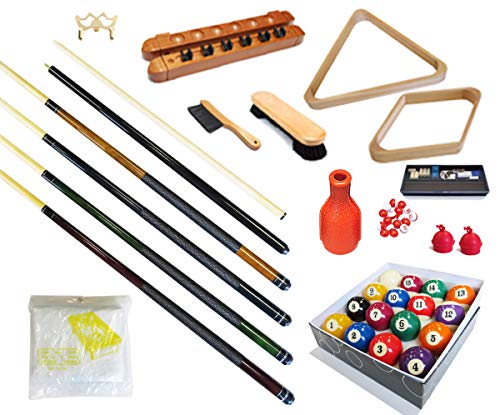
If you have a pool table then you need to get this accessory kit. It includes pool cues, extra pool balls, and all the gear you need to keep your pool table in tip-top shape.
If you are tired of your kids (or friends) ruining your good pool cue when they play then having these extra ones will keep that from happening (just be sure to hide your good one!).
Should I buy a cheap or expensive brand pool table?
You will want to check the headrail or the apron of the pool table to determine its brand. The headrail is usually located at the table end where you break from during play and contains information on place and time of manufacture. There are numerous pool tables on sale by different manufacturers, but you should ensure your choice is from a proven trade name. An alternative to proving authenticity is asking the seller for the original receipt of purchase. You will learn the original price and determine whether it would be worth paying for its stated price of sale after considering other factors. Good quality pool tables from trusted brands depreciate slowly, and you may have to pay an amount nearing retail price. The last thing you will want to do is pay the price for an expensive pool table only to realize that the table is actually cheaply made and not worth what you paid.
Stability of the table
Stability is a primary determinant of table durability. You should, therefore, check the table frame for material, thickness, and pattern. Frames with an H pattern, depth greater than 1.5 inches, and is made of solid wood, sandwich board, or plywood confer more excellent stability compared to other materials. Besides, you need to determine the method used to assemble the table. Those fastened using screws or staples are not meant to be dismantled, and you may throw away your money if you do the reverse. If a table does not meet the above criteria, it may not be worth purchasing.
Bed material
There are several materials that are used to make the table bed ranging from wood, cardboard, MDF, and slate. Slate is the best quality as it gives a smooth playing surface and appropriate weight for exceptional gameplay. The bed thickness should be at least 0.75 inches when made from slate. The 3-piece slate playing surface is recommended, but there is also a one-piece slate playing surface. Consideration of this helps you determine whether the stated cost for a used pool table is realistic.
State of the cloth, bumper, and pockets
These parts of the pool table are vulnerable to wear and tear, therefore require replacement after some time. Nonetheless, proper inspection of these parts is necessary before purchasing a used table. The lifespan of a pool cloth varies depending on the frequency of use. Personal tables may need replacement after 2-8 years, while the commercial pool tables should be replaced annually for excellent gaming. A cloth may have to be changed if it is made of an inferior fabric or was poorly installed. Any defect in the pool table, such as a tear, necessitates immediate replacement. Buying a table that will need other repairs increases the overall cost by $150-1000.
Rail bumper, commonly made of rubber, lasts for approximately 30 years. However, the lifespan can be drastically reduced by poor storage and misuse. Extremes of temperature cause hardening or make the cushions brittle and have a significant impact on the quality of play. Any damages requiring re-installation of rubber would cost between $ 500-1000.
The bumper and the cloth require a professional to inspect while the consumer can check the pocket. Cracked leather or torn iron covers are indications for repair. Pockets can either be leather or pocket and in case of a replacement, only material similar to the original one must be used. Purchasing a used table requires you to consider all the repair costs and any other upgrade necessary that will increase the overall value charge.
What comes with a pool table?
Other items that can come with the pool table include balls, cues, chalk, cloth brush, and others. Ensure that all of them are present and determine their condition. Balls must be made of the same material and free of any blemish.
Conclusion
When you purchase a pool table that has been used, the warranty is of no effect even if it has not expired. The seller is also not obligated to do any replacement or repair after the purchase. Therefore, you must thoroughly check for any defect before finalizing the deal. The cue, if spoiled, should be replaced by new ones rather than repair, which may be costlier.
All the above factors, including age, affect the price of used pool tables, and you should compare the stated amount with the retail price before making a choice. However, quality used pool tables range between $1000 to $10,000 in price, but they are rare to find. This is because most superior tables are passed along family lines or are bought by friends instead of being sold in the market as used items. A second-hand profesional table purchased at $1000 may require many repairs that would make the total cost the same as or more than the retail price of a brand new one.