
*This post may contain affiliate links. As an Amazon Associate we earn from qualifying purchases.
So many people were loving the fact that the GameCube had backward compatibility, but then Nintendo removed it suddenly. Why? In this article, we will be giving you the why and what behind Nintendo’s decision.
So why did Nintendo remove the GameCube’s backward compatibility from Wii?
The main reason they removed the backward compatibility was to lower the price. Also, this was Nintendo’s first time introducing the backward compatibility idea to the gaming world, so people didn’t know what to expect. Nintendo also didn’t want to deal with adding new hardware, which would drive the prices up, and lead to a drop in sales. So instead they decided to remove it.
Are you a huge Nintendo fan? Then you have to check out the Mario and Nintendo gear that you can get. Whether you want a Mario wallet, a Nintendo sweatshirt, or a classic NES hat there are plenty of choices to choose from. You can find them all by clicking here.
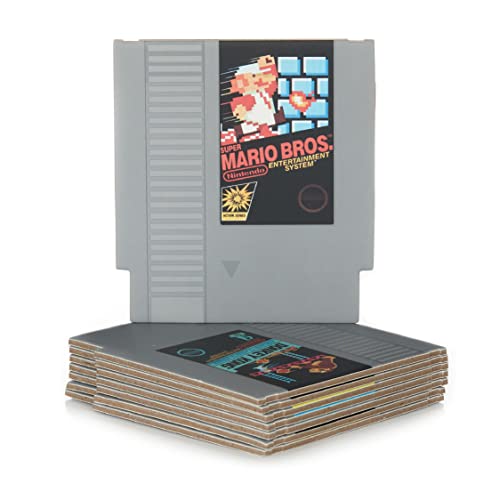
Do you love Nintendo? Then you have to check out this amazon NES cartridge drink coaster set!
This set includes 8 double sides drink coasters that look just like the classic NES cartridges.
This set is a perfect gift for the gamer in your life!
The Best Nintendo Games of 2017
The following are the best games from Nintendo in 2017.
Xenoblade Chronicles 2
Super Nintendo games are considered as one of the “Best Games” to pass your time, and this is why people are always looking to collect these games. Xenoblade Chronicles 2 isn’t one of those games that you play in your spare time.You need to be focused fully on the “Game” because it is tricky and adventurous at the same time.
You have to kill the enemies that come in your way in order to complete the mission, and your hero is skilled with “Different Ninja Moves” and “Weapons” to kill them. Once the enemies are killed, and the goals are achieved, you’ll be promoted to the next mission.
Super Mario Odyssey
This version of the game delivers you everything that you can expect from a modern Super Mario Game. Super Mario Odyssey has changed a lot in the 15 year gap. You can kill the enemies of Mario with new power-ups and other progressive tools in the game to help Mario progress through levels and solving the puzzles.
So, to kill your time, this version of the game is the best and you can get a lot of new features, levels and fun in the game. To download the game, you will need to go to the official website of Nintendo and download Super Mario Odyssey.
The Legend of Zelda: Breath of the Wild
This game was known as one of the first games that Nintendo introduced and people still love it because of the popularity it got. Now, “The Legend of Zelda: Breath of the Wild” has all the reasons that you should go for the Nintendo gaming console. With lush woodlands and amazing mountains, the scenery in the game is good enough to impress you.
You can do everything in the game as you do in real life. For instance, if your health is low, you’ll have to find the food and then cook it in order to revive your energy. You will be given different tasks to complete and if you do them accordingly, you will be promoted to the next game without any problem.
Mario + the Rabbids Kingdom Battle
You don’t have to be the fan of the series in order to praise the game. The game itself is enough to impress you. The game is full of battles that are surprisingly delightful and addictive.
Characters like “Mario” and “Rabbids” are requested to miss the obstacles that come their way. Dodging the obstacles means that you will be promoted to the next level when completing the current level. But, once you fail to clear the obstacles by jumping or sliding, you will have to redo the mission.
So, if you are willing to play the game, then head towards Nintendo’s official website and download it right now. Trust us, you’ll be as addicted to this game as we are.
Super Mario Kart 8 Deluxe
It seemed like “2017 was the year for Mario Bros” because we have seen time and again that Super Mario is hitting the heartstrings of game lovers. The game comes up with the same agenda, and they have introduced new characters like inking girls and inking boys to get the attention of the people.
Not only were characters added, but they have also upgraded the “Battle Mode” which now includes a new gameplay style. You can play this game on the PC as well, and guess what? You can play the game with your friends in the Battle Field.
This game can also be downloaded on Nintendo’s official website. Or, if you want to download the game from free resources then search “Super Mario Kart 8 Deluxe Free” in the search engines and you should be able to find the game.
Stardew Valley
This game is one of those Nintendo games “That are aiming to go for a long-series” and they successfully entered the hearts of game lovers.
The gameplay involves planting trees, cropping them at the right time, farming and a lot of other fun. This game works brilliantly on the mobile phone screen as well. When downloading the game for your console, they provide you an “APK and IOS” copy of your game in order to play it on your phones as well.
Conclusion
So, to conclude this article, let’s go over what we have learned. We have shown you the reason why Nintendo made the decision that they did: in order to keep the prices low. Also, you have learned that people in the gaming world didn’t know what to expect when Nintendo first introduced backward compatibility, so the sales weren’t very good. With those reasons in mind, that is the story of why Nintendo removed the backward compatibility from the GameCube console.